

HORMUZ ATTACKS RISE AS GLOBAL TRADE HOLDS FIRM
Merchant ships remain exposed to escalating security risk. The IMO recorded 100 confirmed Middle East incidents as of 9 October. Yet the WTO lifted its 2026 merchandise trade forecast to 3.9% growth. Trade remains resilient while crews, routing and insurance carry the risk. [S1][S2]
ALBORITHM | SHIPPING & GLOBAL TRADE COMPASS — PDF Edition
Download the complete 12-page illustrated research edition for offline reading. Original approved A4 layout, charts, photographs, source register and clickable Watch & Listen module. 2.25 MB · Research cut-off 10 October 2026, 16:00 IST.
01 | Executive Intelligence Brief
- GULF SECURITY
IMO confirmed 100 Middle East maritime incidents through 9 October; ON PEACE suffered crew injuries. [S1]
- TRADE RESILIENCE
WTO raised its 2026 goods-volume growth forecast to 3.9%, from 1.9% in March. [S2]
- FREIGHT SIGNAL
Drewry WCI eased to $4,351 per 40-foot container on 8 October despite conflict risk. [S3]
- CREW SAFETY
ON PEACE: 12 injured. GEM NO. 2: all 22 Indian seafarers reported safe. [S1][S17]
- INDIAN DIPLOMACY
India and Liberia called for an end to attacks on merchant shipping. [S5]
- PORT PARTNERSHIPS
India discussed ports, skills and green corridors with Gulf and European partners. [S7]
Trade growth does not establish safe shipping. Separate vessel attacks, insurance costs, freight prices and actual service schedules before declaring normalization.
Explore the wider context in The Architecture of Global Trade, the documentary The Hidden Ocean That Runs the World, and the ALBORITHM newsletter archive.
Maritime Security Pulse | Trade & Freight Outlook
Confirmed cumulative cases. [S1]
Volume growth forecast. [S2]
USD per 40-foot box. [S3]
Forecast, not observation. [S2]
8 October, USD/40-foot. [S3]
8 October, USD/40-foot. [S3]
02 | Headline Analysis | Resilience Under Attack
By 9 October the IMO had recorded 100 confirmed Middle East maritime incidents, including the attack on ON PEACE that injured twelve seafarers. The cumulative register shows direct human exposure, but is not evidence of a complete route closure. [S1]
At the same time, the WTO projects 3.9% merchandise trade volume growth in 2026. AI-related capital investment and supply-chain rerouting have helped demand and trade adapt. Those are not measures of safer navigation. [S2]
Trace the transmission mechanism
Carriers, flag states, insurers and cargo owners react at different speeds. Lower spot freight prices do not necessarily mean lower delivered costs. A more constructive reading would require sustained reductions in attacks, stable vessel movements and improved war-risk insurance pricing.
03 | Shipping & Trade Dashboard
| Indicator | Reading | Date / Change | Interpretation |
|---|---|---|---|
| IMO incidents | 100 confirmed | 9 Oct | Middle East cumulative register. [S1] |
| ON PEACE | 12 injured | 5 Oct | Strait of Hormuz ship attack. [S1] |
| WTO goods 2026 | +3.9% | 8 Oct forecast | Merchandise trade volumes. [S2] |
| WTO goods 2027 | +4.1% | 8 Oct forecast | Conditional trade outlook. [S2] |
| WTO services 2026 | +3.3% | 2026 forecast | Transport and travel exposed. [S2] |
| Drewry WCI | $4,351 | −2% weekly | USD per 40-foot container. [S3] |
| Shanghai–LA | $7,624 | −3% weekly | Route-specific rate. [S3] |
| Shanghai–Rotterdam | $3,337 | −2% weekly | Asia–Europe lane. [S3] |
Comparability control: cumulative safety registers, published growth forecasts and spot-rate assessments do not share a denominator, observation period or methodology.
04 | Global Shipping & Geopolitics
Merchant-ship violence is a systemic trading risk. IMO incident records and the ON PEACE casualties show why route security must be considered separately from reported cargo-volume growth. India and Liberia have urged an end to commercial-vessel attacks in the Gulf and Black Sea. [S1][S4][S5]
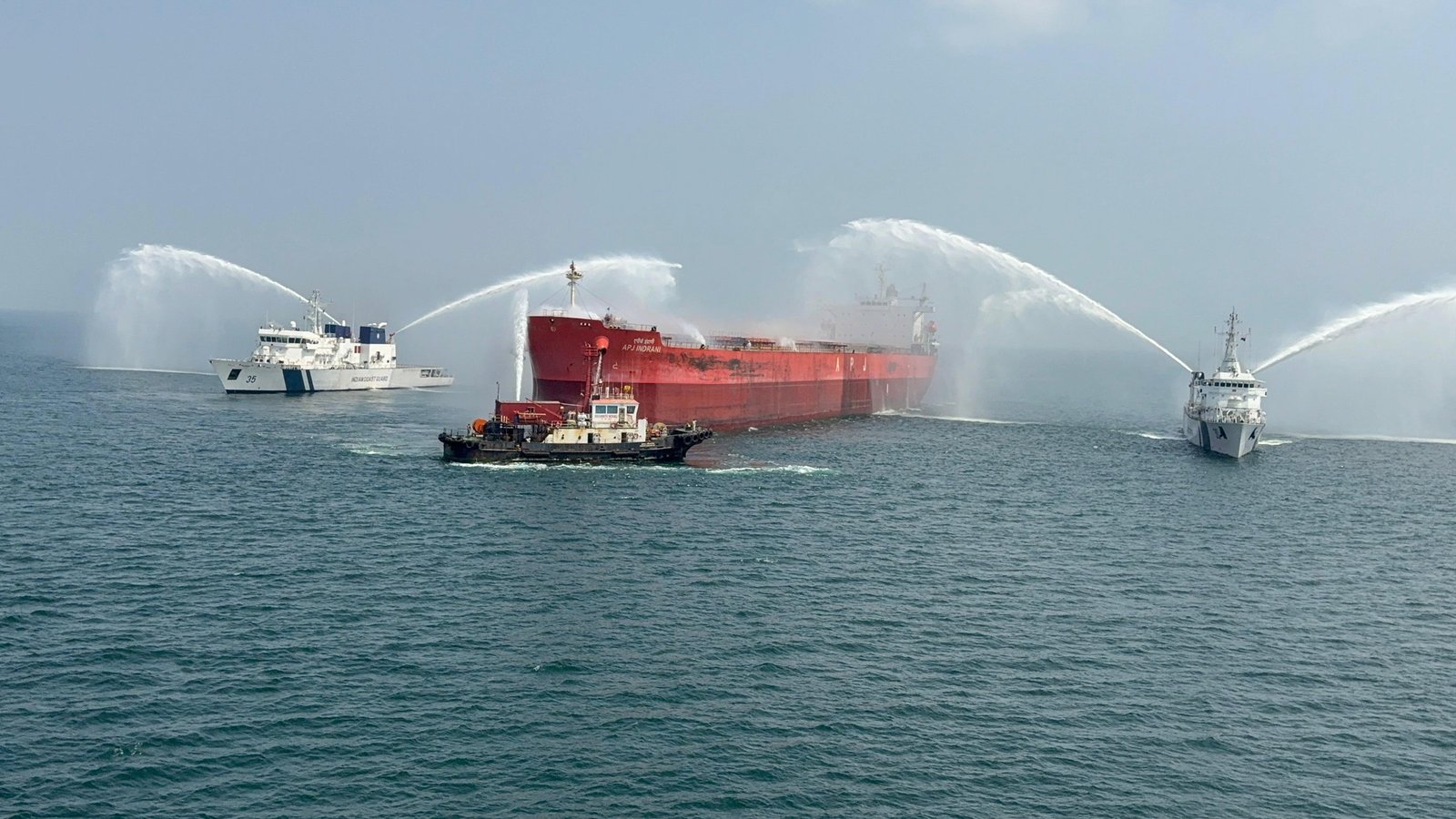
Search-and-rescue capacity is part of trade resilience
India’s SAREX-2026 exercise used 15 Coast Guard vessels and involved 32 foreign observers from 30 countries. Training does not remove geopolitical danger, but improves response capacity when shipping safety is compromised. [S8]
05 | India Shipping & Trade Radar
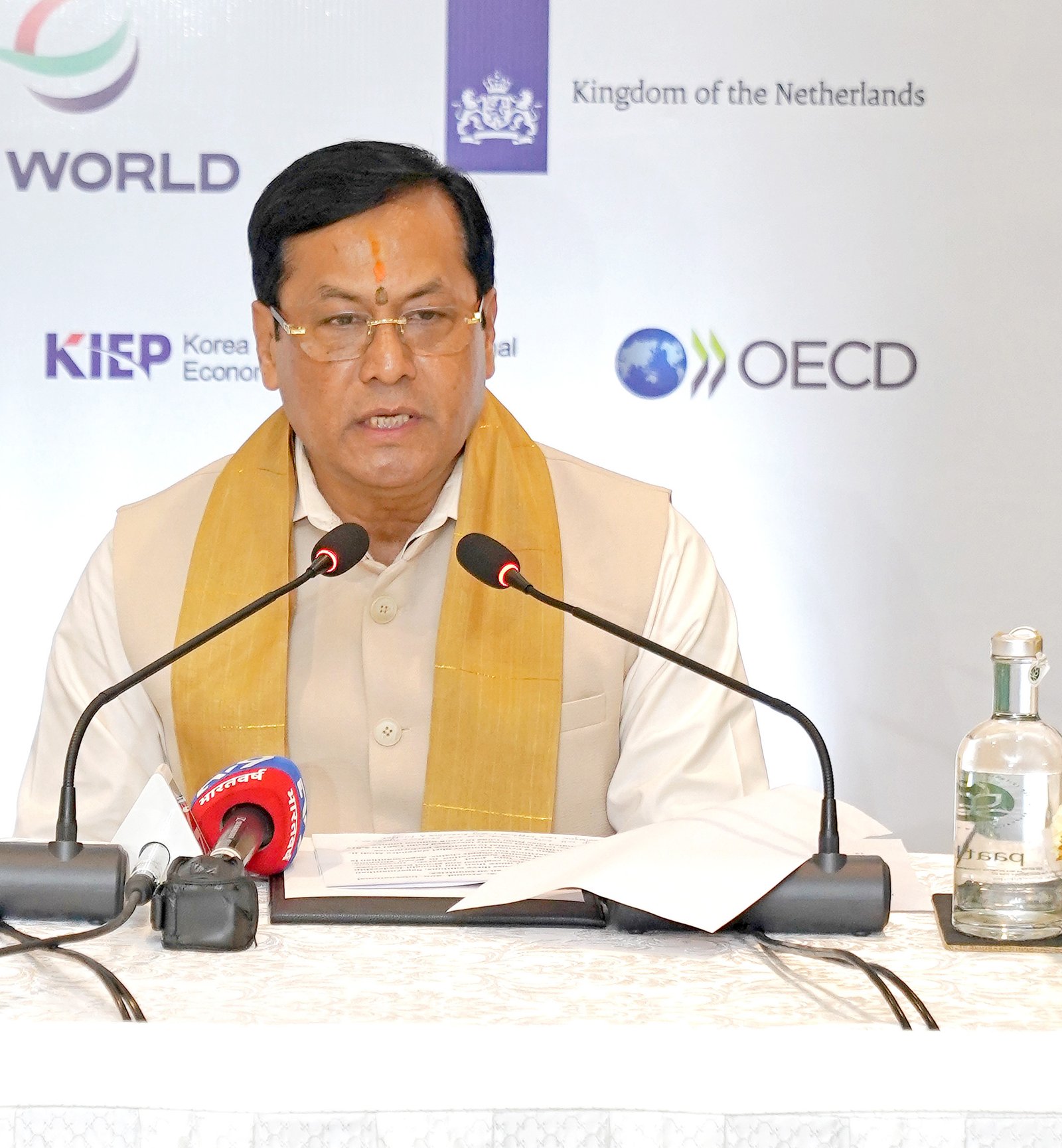
India is exposed through cargo availability, energy and bunker costs, war-risk insurance and shipping contracts. These change at different speeds. At Sagarmanthan on 8 October, officials discussed prospective Saudi involvement in Vadhavan and Galathea Bay ports, green-shipping cooperation with Belgium and inland-waterway links with Bhutan. These were discussions, not completed investments. [S7]
06 | Rules, Policy & Release Calendar
| Release / Regime | Status | Exposure | Next validation |
|---|---|---|---|
| IMO incidents | 100 by 9 Oct [S1] | Marine security | Next verified register |
| India–Liberia | 8 Oct statement [S5] | Crew protection | Implementation measures |
| Sagarmanthan | 8 Oct bilateral talks [S7] | Ports, skills | Signed milestones |
| SAREX-2026 | Mass-rescue drill [S8] | SAR capacity | Lessons learned |
| WTO outlook | Goods +3.9% [S2] | Trade demand | Next updated forecast |
07 | Research & Data Brief
WTO’s improved merchandise outlook signals trade resilience, not safer navigation. Goods and services measure different markets. Drewry’s World Container Index covers container lanes, not tanker-insurance premiums. IMO incident counts are a cumulative event register subject to reporting lags. [S1][S2][S3]
Drewry WCI assesses major east–west container trades; it is not a security index.
Energy shocks or reduced AI investment could alter the trade outlook.
Blank sailings and rerouting change usable liner capacity.
Safety readiness and port capacity support continuity.
08 | Company Research Lab | Port & Carrier Exposure
Operators face different exposures to the same demand environment. Contract rates, network structure, cargo mix, fuel prices, crew risks and insurance all influence profitability. India discussed potential Saudi participation in port projects, but discussion is not committed financing or an operating berth. Verify signed agreements, funding and phased milestones. [S7]
Research control: prioritize signed orders, actual port calls, realized rates and operating cash conversion over nonbinding announcements.
09 | Global-to-India Transmission
Oil importers can face rising delivered prices and insurance; exporters face shipping-window disruption; ports may gain throughput while experiencing higher operating expenses. The 9 October attack on GEM NO. 2 off Sharjah brought seafarer safety into direct focus, with all 22 Indian crew reported safe. [S17]
10 | Signals, Risks & Monitoring Radar
100 IMO Middle East cases through 9 October. [S1]
ON PEACE casualties show the human cost. [S1]
Carrier, insurer and flag-state decisions may vary.
WTO revised 2026 growth to +3.9%. [S2]
10 | Scenario Matrix | Route-Risk Persistence
- ADAPTIVE TRADE · 45% MONITORING WEIGHT
Carriers keep trade moving through network adjustments and managed exposure. Test against reliable insured sailings and port calls.
- SUPPLY SHOCK · 35% MONITORING WEIGHT
Attacks worsen, insurers narrow cover and cancellations rise. Test against sustained safe transits.
- SAFER ROUTES · 20% MONITORING WEIGHT
Diplomacy and maritime protection improve practical safety. Test against lower incident frequency and cheaper cover.
Weights indicate editorial monitoring allocations, not statistical probabilities or investment advice.
11 | Continuity, Revisions & Forward Intelligence
Official Issue 001 is the first canonical edition. Earlier Shipping Compass drafts were tests and are not counted. This week’s meaningful changes were the 100-incident IMO register, WTO goods forecast revision, Drewry rate readings and India’s maritime diplomatic and rescue activity. [S1][S2][S3][S5][S8]
| Cadence | Evidence to watch | Why it matters |
|---|---|---|
| Daily | IMO / UKMTO notices | Evidence of new ship attacks |
| Weekly | Drewry rates and vessel schedules | Freight and capacity repricing |
| Next release | WTO outlook | Revised trade projections |
| Ongoing | Maritime policy implementation | Signed and funded commitments |
12 | ALBORITHM Bottom Line
Trade can remain strong while merchant ships and crews remain unsafe. Verify vessel movements, war-risk cover availability and crew incidents before assuming normalization.
Sources, Credits & Document Control
Further references [S6], [S9]–[S16] and [S18]–[S22] appear in the complete PDF. Photography: Press Information Bureau, 8 October 2026, IDs 217972 and 217968. Observation dates and source classifications are retained in the PDF. Third-party source citations are intentionally non-clickable.
Watch & Listen to This Issue · Explore ALBORITHM
The approved editorial module below provides direct access to this issue’s English Weekly Explainer and English, Hindi and Bengali podcasts, together with the ALBORITHM publication and channel links.
Explore the weekly explainer and podcasts, with clearly labelled destinations.
Discover more research and stories from ALBORITHM.
Read the Original 12-Page PDF Edition
For exact approved artwork, page geometry and the original PDF’s clickable media modules, use the full PDF edition. The embedded reader is provided for convenience and may be small on phone screens.
ALBORITHM | SHIPPING & GLOBAL TRADE COMPASS · OFFICIAL ISSUE 001 · W41 · 10 OCTOBER 2026 · RESEARCH CUT-OFF 16:00 IST
Subscribe to alborithm
Get new documentaries, articles and podcasts directly in your inbox.