

WHY PRICE IS NOT VALUE
Margin of Safety | Mr. Market | Investment Discipline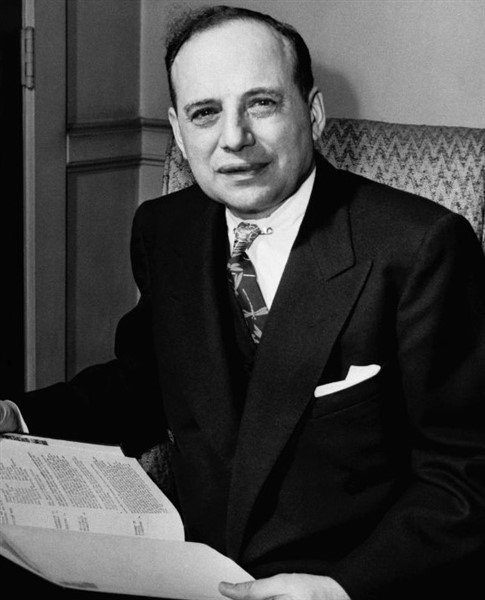
Original ALBORITHM editorial design with a historical Benjamin Graham portrait (1950), not a reproduction of the book jacket. Photograph and rights record.
What if the greatest investing advantage is not predicting which stock will rise, but knowing what a business is worth, how much you might be wrong and when to refuse the market’s price?
The screen says ₹1,000. Yesterday it said ₹850. A month ago it said ₹1,200. Nothing on the screen explains whether the underlying company has become better or worse, how much debt it carries or what a cautious buyer might reasonably pay. Yet the change in price can feel like new knowledge, even when it is only new excitement.
Benjamin Graham built an investment philosophy around that uncomfortable gap between an observable quotation and an uncertain business value. His approach helped define value investing: weighing the price of a security against the evidence of what the underlying business could be worth. The Intelligent Investor, first published in 1949, asks readers to treat shares as interests in actual enterprises and to demand evidence before parting with capital. The book’s enduring achievement is less a formula for becoming rich than a disciplined approach to avoiding expensive mistakes.
That distinction matters in 2026. Low-cost index funds challenge the rationale for active stock selection. Companies increasingly depend on software, intellectual property and other assets that resist old balance-sheet screens. Markets are information-rich but attention-poor. Graham’s ideas still sharpen judgment, yet some of the famous rules attached to his name belong to a different era. A serious reading must preserve both truths.
ALBORITHM | GREAT BOOKS | ISSUE 005
Watch and listen to The Intelligent Investor
One English video explainer and three independent Deep Dive discussions, available in English, Hindi and Bengali.
1. Why Graham distrusted confident prices
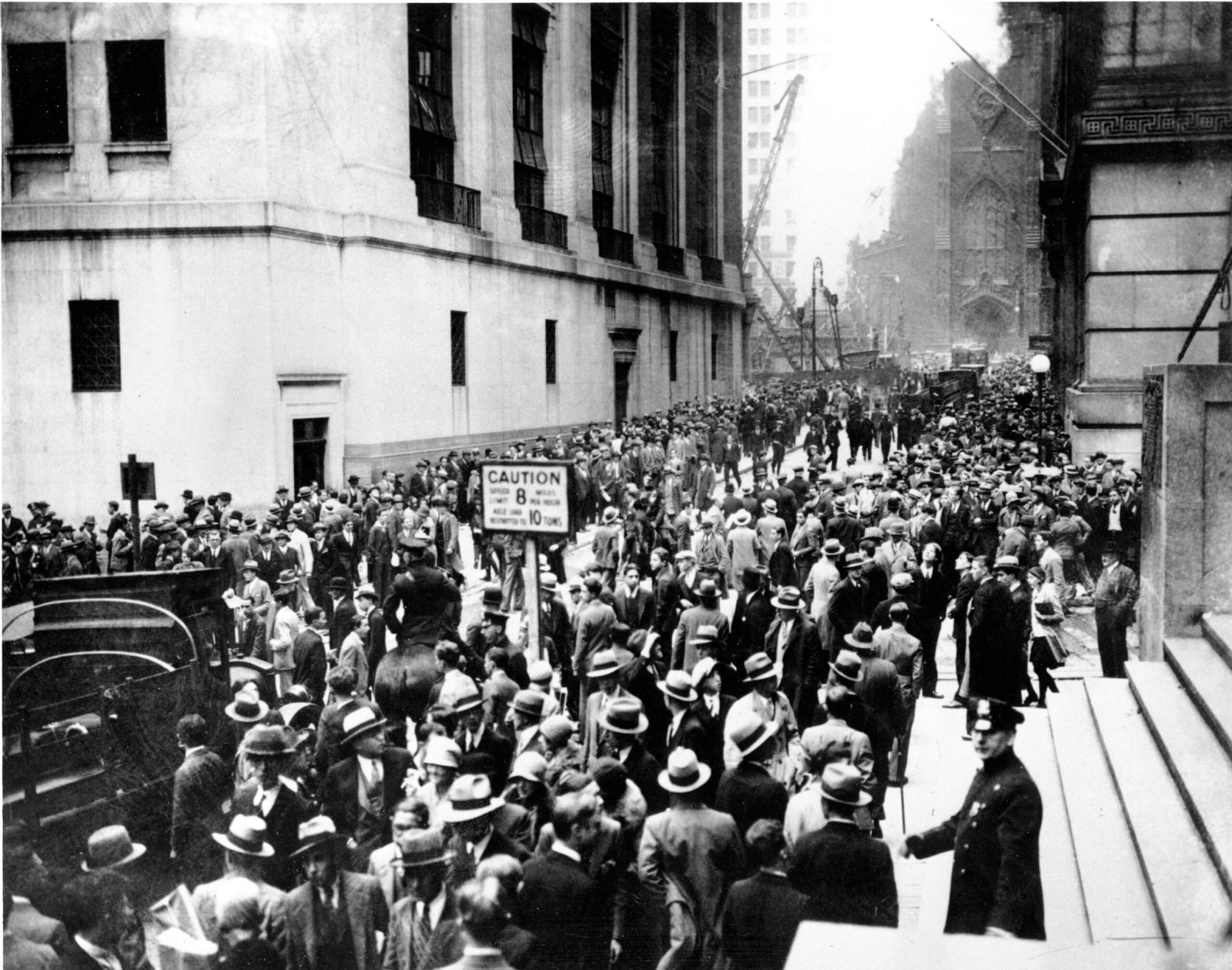
The Wall Street of Graham’s early career had seen a spectacular boom, a disastrous crash in 1929 and the economic injuries of the Depression. A security could be promoted as a remarkable opportunity without anyone asking hard enough questions about its assets, earning power or liabilities. Graham’s response was not to avoid investing altogether. It was to insist that the nature of the claim and the price paid should be evaluated with more care than the mood of the crowd.
With David Dodd, Graham published Security Analysis in 1934, a demanding work for analysts and professional investors. The Intelligent Investor: A Book of Practical Counsel, issued by Harper & Brothers in 1949, offered a more accessible version of the discipline to the investing public. First-edition bibliographic records describe a 276-page work, not the much longer modern annotated editions familiar to many readers. 1949 first-edition library record
But history is more than scenery. Graham’s numbers reflected a world of railways, industrial balance sheets, corporate bonds and very different dividend conventions. His insights grew out of that environment. Transplanting a 1970s stock–bond percentage or asset screen into a modern Indian portfolio without examining interest rates, inflation, tax and business structure would be precisely the kind of mechanical thinking his analytical philosophy ought to discourage.
2. One title, several different books
There is an editorial problem that many popular summaries ignore. The original Intelligent Investor appeared in 1949; Graham revised it repeatedly during his lifetime. His fourth revised edition was developed in 1971–72 and published in 1973. The 2003 HarperBusiness version reproduces that revised Graham text alongside financial journalist Jason Zweig’s later annotations and chapter commentaries. The editorial layers are helpful, but they are not interchangeable. Edition context
The revised edition’s 20 chapters show the breadth of the project. Early chapters examine investment, speculation, inflation and market history. The next group considers portfolio policy for defensive and enterprising investors. Other chapters look at market fluctuations, funds and advisers, security analysis, earnings quality and specific stock-selection standards. The closing stretch examines convertibles, case histories, management and the margin of safety. This is a book about a whole investment process, not just a story about Mr. Market.
Modern summaries often extract a chapter on market fluctuations and a final chapter on the margin of safety, leaving the less glamorous material behind. That is an important distortion. Graham worried not only about price movements but also about the structures through which people invest, the reliability of corporate accounts and the incentives of those managing other people’s money.
The account below discusses the core philosophy and the structure of Graham’s later revised work. It does not attribute the 1973 chapter map, Zweig’s 2003 observations or 2026 market statistics to the first edition. No invented quotations or first-edition page citations are supplied. Readers interested in exact wording should consult a lawfully obtained, identified edition of the book.
3. Investment and speculation are separated by a test, not a personality
Graham’s distinction is often turned into a moral judgment: patient people invest; excitable people speculate. The more rigorous question is whether a purchaser has examined the security closely enough to justify a prospective return while recognising threats to principal. A forecast is not automatically unsound because it concerns the future. It becomes dangerously speculative when the buyer cannot explain the underlying economics or depends primarily on a subsequent rise in the market price.
A high-quality company can be a poor investment at an extravagant price. A troubled company can look cheap and remain a terrible purchase. Neither reputation nor a low valuation multiple settles the matter.
Consider two types of reasoning.
INVESTMENT TEST: What generates the business’s cash, how resilient is its balance sheet, what range of earnings is plausible and what price would compensate for the risks?
SPECULATIVE HOPE: The share has been rising, experts are excited, a fashionable theme is attracting flows and another buyer will probably pay more.
Real decisions may contain elements of both. Graham’s contribution is to make the difference visible and to require the investor to recognise which argument is actually carrying the purchase.
4. Mr. Market offers prices, not instructions
Graham’s famous metaphor imagines a business partner who regularly offers to buy or sell an ownership interest at a changing price. Some days the offer is exuberant; on others it is fearful. The investor is free to accept it, reject it or do nothing. The market provides liquidity and quotations; it need not provide one’s convictions.
This is a radical idea in an age of financial dashboards and price notifications. The quoted value of an investment changes continually, but an operating business seldom changes its prospects with the same frequency. A stock’s decline may offer an opportunity when the business remains sound. It may also reveal weaknesses that yesterday’s analysis overlooked.
The intelligent response is therefore not to buy automatically on a fall or sell automatically after a rise. It is to distinguish a change in quotation from a change in fundamentals. Sometimes that means buying; often it means waiting. Independent judgment is not the same thing as permanent opposition to the crowd.
5. The margin of safety, demonstrated without magic
A margin of safety is the distance between a conservative estimate of economic value and the price paid. Graham’s ambition was to create some protection against incomplete knowledge, imprecise projections and unfortunate developments. The word ‘safety’ should not be mistaken for a guarantee.
Imagine a company whose cautious intrinsic-value estimate is ₹100 per share. Buying at ₹95 gives only a small buffer. Buying at ₹65 provides a larger one, if the estimate is defensible. Now suppose new evidence shows that the company can earn far less than projected and is worth only ₹40. The apparently comfortable ₹65 purchase is suddenly expensive.
| Illustrative situation | Estimated value | Purchase price | Discount to estimate | What it really means |
|---|---|---|---|---|
| Cautious valuation, near-full price | ₹100 | ₹95 | 5% | Little allowance for error |
| Same valuation, lower price | ₹100 | ₹65 | 35% | Larger buffer, if assumptions hold |
| Valuation fails | ₹40 | ₹65 | None; price exceeds value | A ‘cheap’ purchase can lose money |
The table is an original teaching example, not Graham’s published calculation, a recommendation or a forecast. Its purpose is to reveal where judgment enters the arithmetic. A responsible analyst must test the durability of margins, the quality of cash conversion, capital needs, debt, management and the possibility of permanent economic decline.
A low price is not a substitute for sound premises. Valuation itself can become the source of risk when a tidy spreadsheet conceals unjustified certainty.
6. Defensive investors and enterprising investors need different tools
Graham differentiated between a defensive investor, who seeks a resilient programme without continual complex analysis, and an enterprising investor willing to devote far more time and skill to searching for opportunities. These are not rankings of intelligence or ambition. They are descriptions of the burdens an investor is prepared and able to assume.
For an investor with work and family obligations, an inexpensive and diversified portfolio that can be maintained through market cycles may be a strong decision. The point is not that index investing existed in Graham’s 1949 form; it did not. Rather, the logic of a reliable, modest-effort process resonates with today’s broad funds and ETFs.
The enterprising route is different. Analysing individual companies means judging accounts, competitive advantages, governance and management incentives. It also means comparing actual after-cost results with a relevant benchmark and being willing to acknowledge failure. More work is not evidence of greater skill.
Historical allocation recommendations should be treated as historical. The appropriate mix of cash, bonds and equities depends on present yields, inflation, liabilities, taxes, liquidity and the possibility of needing funds during a downturn. A formula transported across seven decades and between countries without those adjustments is not prudent.
7. The chapters people skip are often the most revealing
Funds and advisers: incentives behind the advice
Graham devoted attention to investment funds and professional advisers rather than assuming that delegation automatically removes risk. A fund’s apparent sophistication says little about the investor’s net outcome unless its strategy, expenses and incentives are understood. The question is whether an adviser adds demonstrable value, follows a coherent mandate and charges a price that leaves a reasonable benefit for the client.
Today that question encompasses expense ratios, tracking difference, portfolio turnover, tax treatment and the clarity of the benchmark. It also includes conflicts between gathering assets under management and delivering good client outcomes. These are modern implementations of a longstanding concern, not literal descriptions of instruments Graham never encountered.
Earnings and case histories: the danger of attractive numbers
The revised book examines per-share earnings, comparisons between companies and instructive corporate episodes. That material broadens the reader’s field of vision beyond one supposedly decisive price-to-earnings ratio. A company can record strong accounting earnings while consuming cash, relying on leverage or postponing economically unavoidable costs.
The analyst’s task is to distinguish a genuine bargain from temporary peak profits, optimistic accounting or weakened assets. Graham’s case-driven method is useful because a single precise formula does not reveal every way a financial argument can fail.
Convertibles, shareholders and management: who benefits?
The revised text also examines convertible securities, warrants, shareholder relations and dividend policy. They may seem remote from the book’s celebrity concepts, but they involve fundamental questions of ownership, dilution and capital allocation. A convertible can alter the future distribution of economic value; an acquisition can transfer wealth away from existing owners; an apparently profitable company can keep returns from reaching minority shareholders.
For contemporary Indian readers, these questions connect naturally with related-party transactions, promoter governance, share issuance and the treatment of minority investors. The relevant lesson is not that every old instrument remains popular. It is that a security’s legal and financial structure matters as much as a compelling narrative about the company.
8. Where Graham meets modern accounting and valuation research
The world now contains many companies whose most valuable assets are not factories or inventories. Software, brands, research, data and distribution networks can generate earning power without appearing fully on conventional balance sheets. Conversely, supposed intangible advantages can be very hard to measure and easy for promoters or analysts to exaggerate.
A company trading at a low price-to-book ratio may possess deteriorating assets or an obsolete business model. A company with little tangible book value may have strong economics, yet a speculative price can still destroy the investment case. Graham’s suspicion of unexamined optimism survives; any suggestion that one historical multiple is sufficient does not.
In a 2018 Financial Analysts Journal study, Stephen Penman and Francesco Reggiani analysed how value traps can arise when accounting signals and the risk of earnings growth interact. A 2025 paper by Derek Bergen and colleagues examined a broader intrinsic-value approach incorporating future economic profits, rather than relying only on traditional book-to-market screens. Its reported historical return patterns are research findings, not promises of repeatable investor gains. Value-trap research | 2025 valuation research
The CFA Institute’s 2026 equity valuation curriculum also cautions that multiple valuation models may be needed because different methods and assumptions produce different estimates. This is a modern analytical expression of the humility demanded by Graham’s margin-of-safety principle. CFA valuation framework
9. Does a brilliant philosophy beat the market?
Graham influenced distinguished investors, including Warren Buffett. Buffett’s 1984 Superinvestors of Graham-and-Doddsville argument presented successful investment records associated with Graham’s school as an important challenge to the idea that all investment achievement must be random. This is an influential defence of a tradition, but it does not answer every question about who was selected for study, who failed and what an ordinary investor can reproduce after costs. Columbia Business School archive
A sharper test for the contemporary reader is the evidence on active managers. S&P Dow Jones Indices reported in the SPIVA India Mid-Year 2026 scorecard, published 21 September 2026, that over the ten years to 30 June 2026 more than 70% of actively managed funds underperformed their benchmarks in each of five reported Indian categories. The figures vary by category, and benchmark choice and fees matter. They are not a direct test of Graham’s original strategy or proof that all active investing fails.
What they do demonstrate is the difficulty of converting investment opportunities into dependable relative returns. Markets may be inefficient in places, yet identifying those inefficiencies in advance, constructing portfolios, bearing risk and retaining the advantage after costs are different tasks.
The same caution applies to academic evidence supporting more sophisticated value models. A backtest can illuminate a hypothesis; it does not tell a particular reader what future return to expect. Robustness, implementation costs, capacity and changing market conditions must be examined.
10. The Indian adaptation: governance and household reality
An Indian investor considering Graham’s principles should begin with the economics and rights of the securities actually available. Does reported profit convert to operating cash? Are debt maturities manageable? Can the company remain viable if financing becomes expensive or commodity demand weakens? Are related-party transactions transparent? Are promoter actions consistent with protecting minority owners?
One can imagine two equally low-priced companies. The first has robust cash generation, moderate leverage and clear disclosures. The second has large contingent obligations, weak governance and persistent earnings adjustments. The discount in the second case may be a warning rather than an opportunity.
For mutual funds and ETFs, the investigation shifts toward asset allocation, holdings concentration, benchmark suitability, expense ratios, tracking difference, liquidity and tax implications. SEBI’s investor-education guidance places these choices within the investor’s objectives and capacity to bear risk. These principles do not constitute a specific recommendation for any share or fund.
A household’s need for cash can be as important as the mathematical attraction of an investment. Someone who may need money for education, medical costs or a near-term obligation cannot always afford to wait for a market thesis to recover. Good valuation cannot rescue an unsuitable time horizon.
11. Five hard objections every admirer should confront
The value-trap problem. A low price can correctly anticipate permanent decline. Cheapness relative to past earnings or accounting assets may not create genuine protection.
The intangibles problem. Historical screens may misread businesses whose value comes from software, intellectual property and network effects. Such assets can create real value, but overly confident forecasts can also inflate prices.
The measurement problem. Intrinsic value is not directly observable. Sensible analysts may disagree about cash flows, discount rates, capital requirements and terminal assumptions. A range of outcomes can be more honest than one target price.
The selection problem. We remember successful investors and surviving funds more easily than failed strategies. An appealing lineage is not sufficient evidence that followers can replicate results.
The behavioural problem. A method may look convincing on paper while demanding long periods of being wrong relative to the market. Concentration, leverage, liquidity needs and the pressure of comparison can make an investor abandon a strategy at the least convenient time.
None of these objections requires abandoning Graham. They require reading him as a thinker committed to intellectual caution rather than as the inventor of a machine that dispenses bargains.
12. An investor’s five-question examination
- What do I own? Explain the enterprise’s economics or the fund’s mandate without referring to its recent price chart.
- What might I have missed? Test earnings quality, financing, competition, governance and adverse scenarios.
- What compensates me for being wrong? Explain the valuation buffer and why it is real rather than a spreadsheet illusion.
- What is the alternative? Compare the proposed investment process with suitable diversified exposure after fees, taxes and risk.
- Can I maintain the decision? Check whether position size, liquidity and personal obligations allow the strategy to survive a severe drawdown.
These are questions for diligence, not a mechanical buy signal. They are also reasons to decline a transaction when the evidence is too uncertain.
13. The lasting achievement of The Intelligent Investor
Graham’s most demanding lesson is not how to calculate a ratio. It is the willingness to say no when a price is unjustified, to examine a falling business rather than automatically buy it, and to reject the comforting idea that being thorough makes an investor immune to error.
A serious reader need not accept every historical allocation, asset screen or empirical claim to value the book. Its intellectual force lies in joining financial evidence to temperament. Prices are continuously available; defensible value judgments require work; genuine risk control begins by admitting that the judgment can fail.
In markets that reward confidence and noise, that remains an unusual form of intelligence.
Frequently asked questions
What is the central message of The Intelligent Investor?
A rational investor should examine securities as economic claims, distinguish purchase price from uncertain underlying value and protect against errors through cautious analysis and an adequate margin of safety.
What does Mr. Market mean?
It is Graham’s metaphor for the sometimes volatile offers made by the market. A changing quotation is not a command to change one’s assessment of the business.
Is Graham recommending every stock with a low P/E or price-to-book ratio?
No. Accounting quality, liabilities, competitive prospects and governance matter. A low ratio can reflect a genuine problem rather than a mispricing.
Is this book useful for investors who only buy mutual funds or ETFs?
Yes. The defensive-investor logic is relevant to maintaining diversified, low-cost investment policies, though modern ETFs and many current fund features were not part of the 1949 investment environment.
Is The Intelligent Investor relevant to investors in India today?
Yes, as a framework for questioning valuation and managing risk, not as a ready-made stock-selection formula. For Indian companies, investors also need to examine audited financial statements, cash flows, promoter governance, related-party transactions and liquidity. SEBI’s investor guidance is a useful current complement to Graham’s historical principles.
Is this article based on the original 1949 edition?
The 1949 first publication is established bibliographically. The analysis of chapter structure concerns Graham’s 1973 revised text, as reproduced with Jason Zweig’s added commentaries in 2003. The two are distinguished rather than presented as the same edition.
Is ALBORITHM producing an audiobook or authorised adaptation?
No. The article and accompanying video/audio programmes are independent educational analysis and criticism, not unabridged readings, translations of the copyrighted book or presentations endorsed by the book’s rights holders.
Research method, rights and editorial limitations
ALBORITHM has independently written this commentary and distinguished Graham’s historical arguments, later editorial explanations, modern research findings and its own judgments. First-publication details are grounded in rare-book bibliographic records. Revised-edition structure is checked against a 2003 publication containing Graham’s 1973 text and Jason Zweig’s commentary; that particular PDF has a third-party website watermark, which is not evidence of redistribution or NotebookLM-upload rights. The book is still protected by copyright in India through the end of 2036 under the usual life-plus-60-year rule. No extended book passages, scans, copyrighted figures or imitation of the original edition are reproduced here.
The contemporary examples are explanatory and dated to 4 November 2026. They are not claims made in Graham’s 1949 book. Investors should consult original company filings, regulated disclosures and qualified advisers as appropriate. The article does not provide personalised financial advice or guarantee returns.
References and further reading
- Benjamin Graham, The Intelligent Investor: A Book of Practical Counsel, New York, Harper & Brothers, 1949. Open Library 1949 first-edition catalog record (source: Library of Congress and Harvard).
- Jason Zweig, The Intelligent Investor, edition and commentary information. Revised Graham edition updated 1971–72, first issued 1973; Zweig commentary added to a 2003 edition.
- Irving Kahn and Robert D. Milne, Benjamin Graham, The Father of Financial Analysis, CFA Institute Research Foundation, 1977.
- Warren E. Buffett, The Superinvestors of Graham-and-Doddsville, Columbia Business School, 1984.
- Stephen Penman and Francesco Reggiani, Fundamentals of Value versus Growth Investing and an Explanation for the Value Trap, Financial Analysts Journal, 2018.
- Derek Bergen and colleagues, Intrinsic Value: A Solution to the Declining Performance of Value Strategies, Financial Analysts Journal, 2025. Public abstract used; full text may require membership.
- CFA Institute, Equity Valuation: Concepts and Basic Tools, 2026 curriculum.
- S&P Dow Jones Indices, SPIVA India Mid-Year 2026, 21 September 2026.
- Securities and Exchange Board of India, Factors to Consider Before Investing.
- U.S. Securities and Exchange Commission, Asset Allocation, Diversification and Rebalancing.
- Associated Press, Crowds outside the New York Stock Exchange, 24 October 1929. Historic photograph, listed as public domain in the United States by Wikimedia Commons; verify rights independently for other jurisdictions.
- Benjamin Graham, historical portrait dated 23 March 1950, photographer unidentified; Wikimedia Commons provides the U.S. rights assessment. Featured in the original ALBORITHM editorial design.
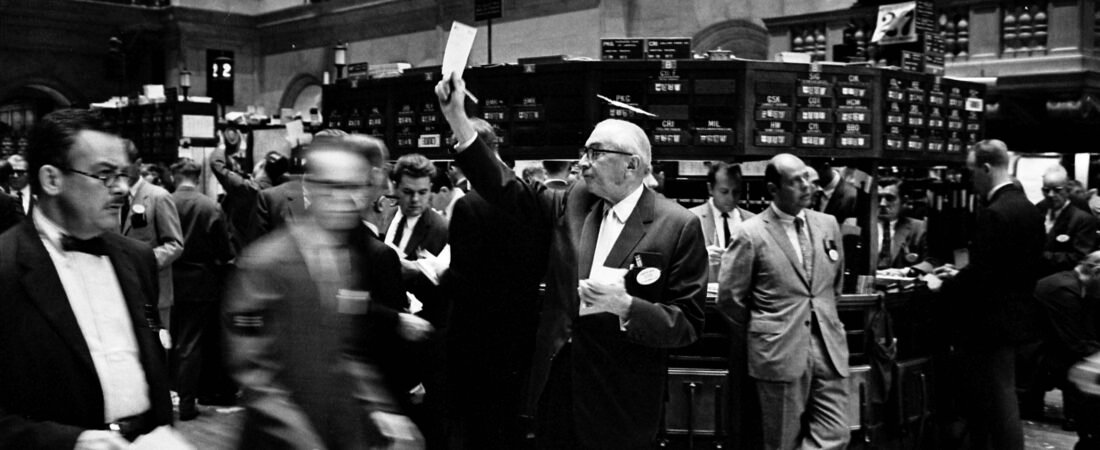
- Thomas J. O’Halloran, New York Stock Exchange trading floor, 1963, Library of Congress; featured photograph for the Great Books archive, not repeated within the article.
- Government of India, Copyright Act 1957, Chapter V.
Subscribe to alborithm
Get new documentaries, articles and podcasts directly in your inbox.