
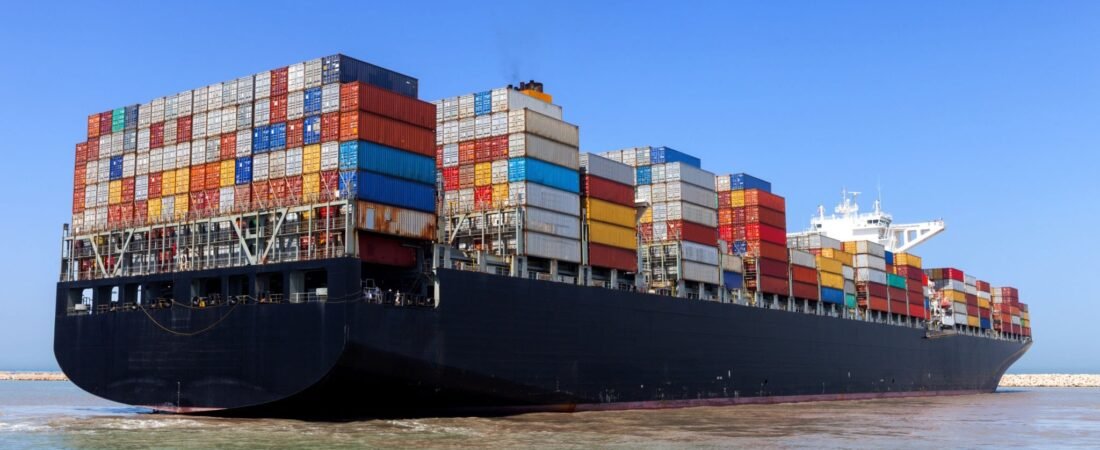
The Magic Box
Step into any modern hypermarket, and the shelves present a reality that would have been mathematically, physically, and economically impossible just seven decades ago. Chilean grapes sit perfectly chilled beside European cheeses, Japanese consumer electronics, and fast-fashion apparel woven in Bangladesh. This cornucopia of global goods is available to the average consumer for a fraction of its historical cost. We instinctively credit this reality to abstract concepts: the triumph of “globalization,” the implementation of multilateral free trade agreements, or the rapid advancement of digital algorithms.
Yet, the true architect of this deeply interconnected world is far more tangible, intensely industrial, and remarkably mundane. The invisible plumbing of the modern global economy is a simple, corrugated steel box.
This investigative report explores the mechanical origins, the staggering economic earthquakes, the geographic reconfigurations, and the digitized technological future of the shipping container—the magic box that fundamentally shrank the planet.
The Era of Muscle and the Break-Bulk Nightmare
To comprehend the revolutionary impact of the shipping container, one must examine the chaotic, sweat-soaked reality of maritime trade prior to its invention. For centuries, the shipping industry relied almost exclusively on what was known as “break-bulk” cargo. Goods were transported in a bewildering, non-standardized array of wooden crates, canvas sacks, metal barrels, kegs, and glass carboys.
The loading and unloading of a cargo ship was a logistical nightmare reliant entirely on the brute force of human muscle. Stevedores, or longshoremen, utilized steel hooks, wooden pallets, and heavy rope slings to manually lower cargo from the docks into a ship’s hold.
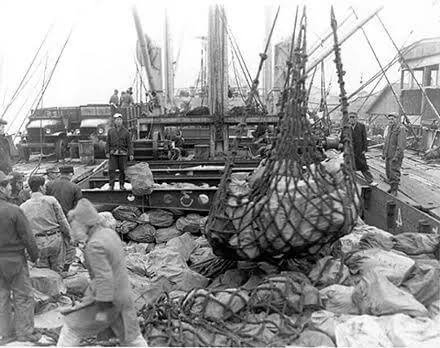
The labor-intensive break-bulk era. Source: EasyCargo
Once inside the hold, crews of twenty to twenty-two dockworkers engaged in a lethally dangerous, three-dimensional game of spatial management. They wedged dissimilar objects against the curved bulkheads of the vessel, poking and prodding the merchandise into snug corners to ensure the cargo would not shift catastrophically during violent ocean swells. It was a system nearly designed for massive inefficiency, widespread theft, and frequent fatalities; in large ports, a worker was killed every few weeks.
The Haunting Case of the SS Warrior
The operational paralysis of the break-bulk era was rigorously documented in a landmark 1954 government-sponsored study by the U.S. National Research Council, which tracked a C-2 type cargo ship named the SS Warrior. The vessel’s voyage from Brooklyn, New York, to Bremerhaven, Germany, serves as a stark historical baseline for pre-containerization logistics.
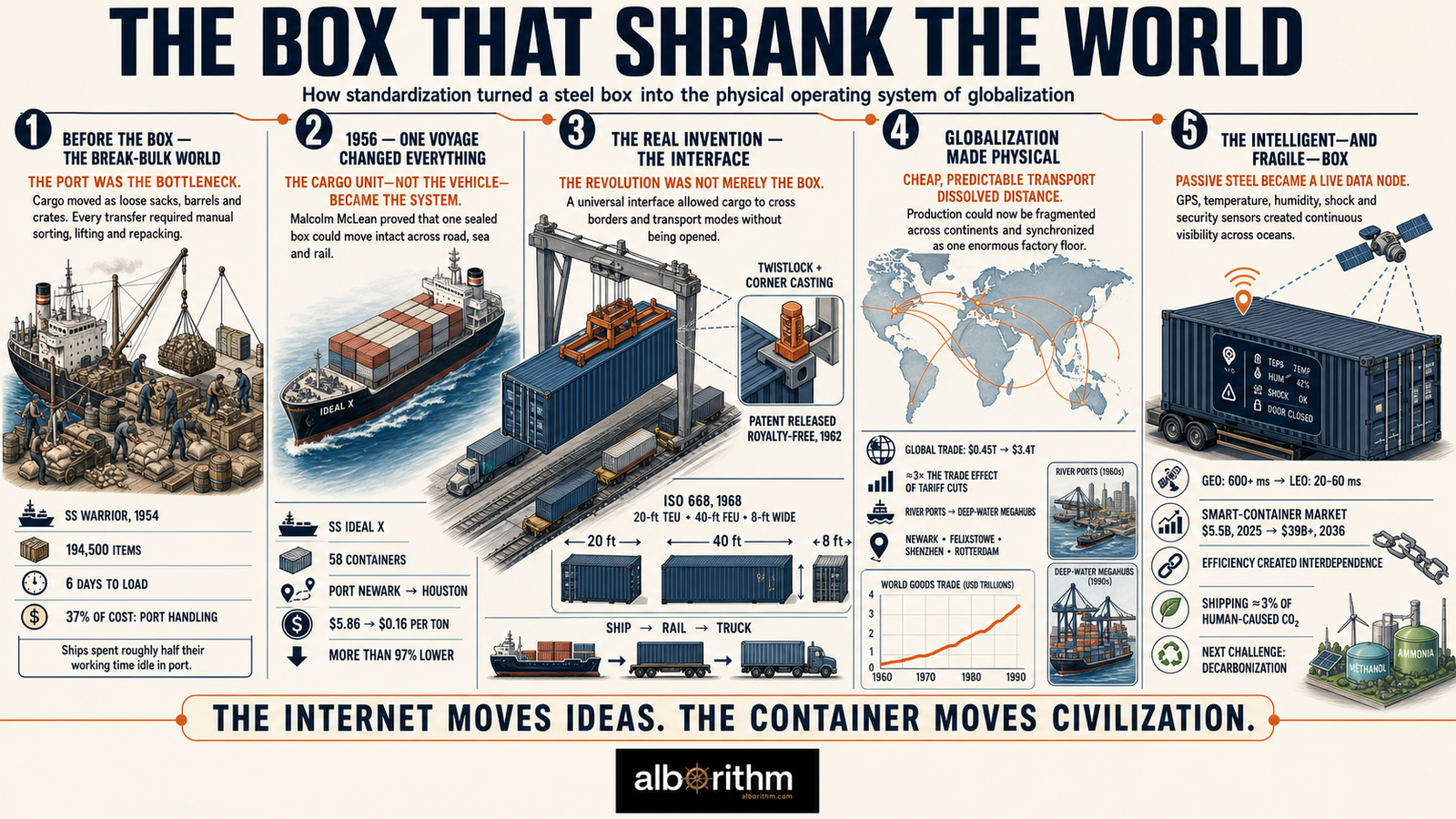
The SS Warrior was loaded with 5,015 long tons of general cargo, arriving at the Brooklyn docks in 1,156 separate shipments originating from 151 different American cities. The physical manifestation of this cargo was staggering in its fragmentation, consisting of over 194,500 individual items—including 74,903 cases, 71,726 cartons, and 24,036 bags.
Loading this inventory required a small army of dockworkers operating on eight-hour shifts over six full days. Furthermore, the workers utilized over $5,000 worth of disposable lumber and rope simply to lash the cargo down.
Consequently, the vessel spent roughly half of its active voyage time sitting idle in port, generating zero revenue while accruing massive labor costs. Financially, the breakdown was devastating. The total cost to move the goods was $237,577 (in 1954 dollars). The sea voyage itself accounted for only 11.5% of this expense, while cargo handling at the ports accounted for roughly 37%. In modern equivalent currency, moving this cargo cost approximately $420 per tonne.
For many consumer goods of the era, maritime shipping accounted for nearly 25% of the total product cost, effectively pricing international products out of reach for the average consumer.
The Visionary Trucker and the Genesis of Intermodalism
Historians of technology frequently note that paradigm-shifting innovations rarely originate from industry insiders, whose imaginations are deeply constrained by legacy systems and sunk costs. The shipping container was not invented by a seasoned ship captain or a naval architect. It was pioneered by an exasperated truck driver.
In 1937, a 24-year-old trucking entrepreneur named Malcom McLean sat in his truck cab at a pier in Hoboken, New Jersey. He waited, fuming with boredom and watching his profit margins evaporate for days as dockworkers slowly unloaded his cotton bales and transferred them piece-by-piece into a ship’s hold. McLean realized a fundamental truth of logistics: his clients did not care whether their goods traveled by road, rail, or sea. They only cared about getting their products from the point of origin to the destination cheaply, safely, and on time.
In 1955, navigating a maze of government red tape that separated terrestrial and maritime transport, McLean purchased a steamship company, renaming it Sea-Land Service. In April 1956, his refitted tanker, the SS Ideal X, sailed from Port Newark to Houston, carrying exactly 58 standardized aluminum boxes locked onto its deck.
The economic impact was immediate: cargo handling costs plunged instantly from $5.86 per ton to an astonishing $0.16 per ton—a reduction of more than 97%.
The Standardization Miracle: Engineering a Borderless World
It is a pervasive misconception that the steel box itself was the core invention. A box is merely a static container; the true innovation was the rigorous standardization of the global transport interface. The container revolution succeeded because it forced the entire global transportation apparatus to conform to a single mathematical and engineering reality.
The Twistlock and the Corner Casting
The technical linchpin of the entire global supply chain is an obscure piece of hardware known as the twistlock. Invented in the mid-1950s by mechanical engineer Keith Tantlinger, the twistlock solved the critical physical problem of safely stacking and securing massive steel boxes on a pitching ship.
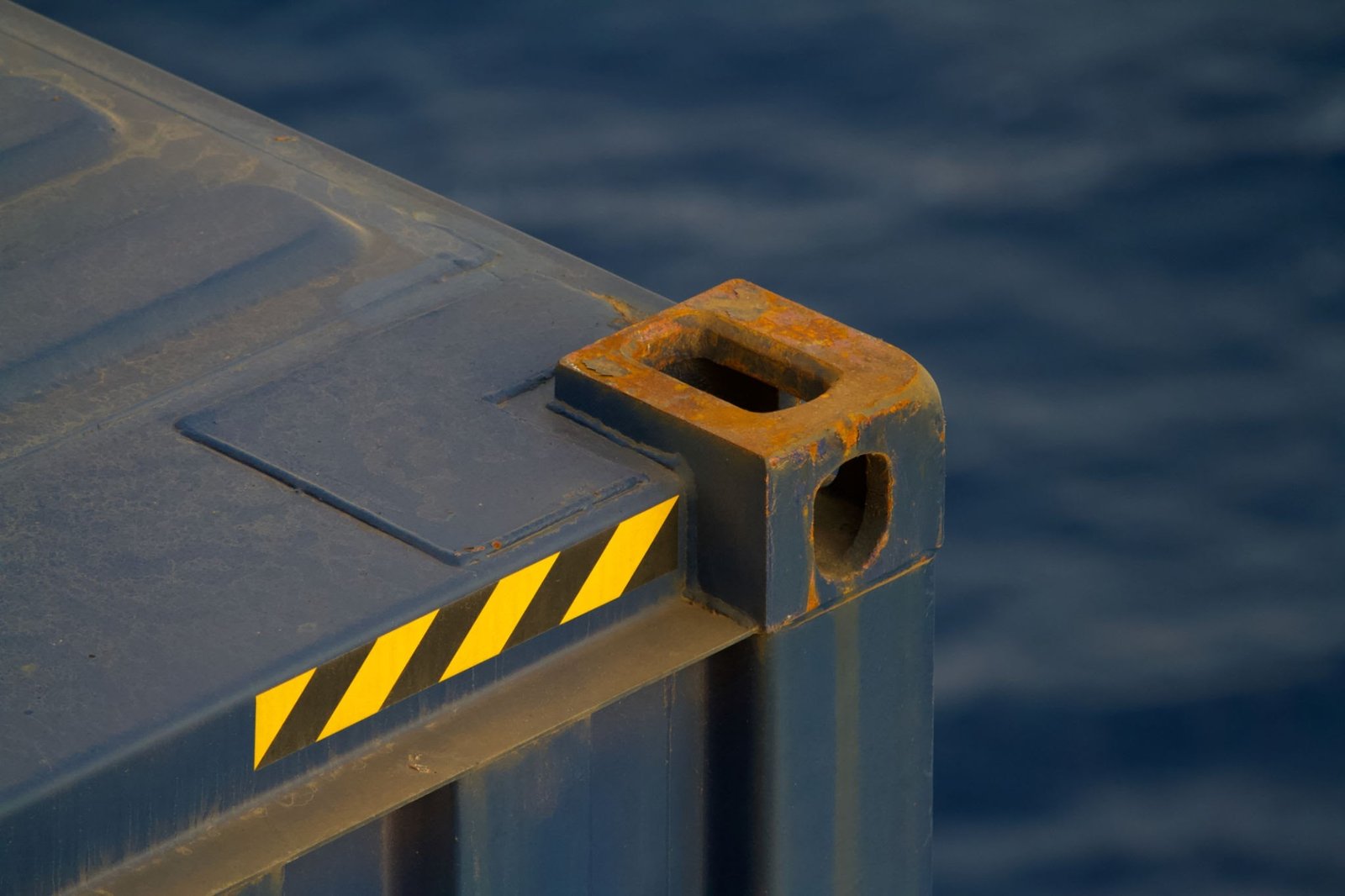
The universal corner casting mechanism.
Tantlinger engineered a heavy-duty, rotating steel pin mechanism designed to engage seamlessly with specialized “corner castings”—hollowed, reinforced steel blocks welded directly into the eight structural corners of the container. When a gantry crane lowers one container onto another, the twistlocks guide the boxes into perfect geometric alignment.
Recognizing that proprietary technology would stifle global adoption, McLean and Sea-Land Service released the twistlock patent royalty-free to the world in 1962. By giving away the mechanical link for free, they ensured their specific operational vision became the universal language of the global economy.
ISO 668: The Blueprint of Global Trade
Following the release of the twistlock patent, the International Organization for Standardization (ISO) stepped in. First published in 1968, the ISO 668 standard established the strict physical parameters that govern trillions of dollars of global infrastructure today.
ISO 668 dictates that all Series 1 containers share a uniform width of 2.438 meters (8 feet). More importantly, the standard dictates astonishingly tight dimensional tolerances. A nominal 20-foot container is engineered to an exact length of 19 feet 10.5 inches, with a tolerance of merely +0 / -0.25 inches. Because of this rigid adherence, a container loaded in Shenzhen perfectly fits onto a truck chassis in Los Angeles, seamlessly locks onto an intermodal railcar in Chicago, and is securely handled by an automated reach stacker in Rotterdam.
The North American Anomaly While ISO 668 standardized international trade around 20-foot (TEU) and 40-foot (FEU) containers, a divergent standard evolved in North America. The 53-foot domestic container—six inches wider than a standard ISO box—perfectly mirrors highway dry van trailers, offering 60% more cubic volume. Because they exceed ISO parameters, they are rarely used for deep-sea shipping, creating a massive, physically distinct supply chain tailored exclusively for domestic North American consumption.
The Economic Earthquake: Policy vs. Physics
In the decades following World War II, global trade grew in real terms by a factor of seven, exploding from $0.45 trillion in the early 1960s to $3.4 trillion by 1990. Traditionally, political historians attributed this boom to “top-down” diplomatic efforts, specifically the reduction of tariffs driven by the General Agreement on Tariffs and Trade (GATT).
However, rigorous econometric analysis reveals a starkly different reality: physics, engineering, and logistics did vastly more to integrate the world economy than policy.
A landmark study from the University of Nottingham and Lund University proved that the introduction of a physical standard—a “bottom-up” technological protocol—was roughly three times more effective at stimulating international commerce than decades of complex international diplomacy.
The Zero-Cost Illusion and the Fish Paradox
The immediate macroeconomic result of containerization was the near-total collapse of transport friction. Today, moving a tonne of cargo across the ocean costs roughly $50, a negligible fraction of its historical equivalent.
This dynamic created what analysts term the “Fish Paradox.” Today, it is economically viable to catch fish off the coast of the United States, freeze it, ship it in a refrigerated container 10,000 miles to East Asia to be processed by lower-wage workers, and ship it 10,000 miles back to Western supermarkets. The container made it cheaper to circumnavigate the globe than to pay a local worker a living wage, firmly establishing the planet as a single, vast factory floor.
Shifting Sands: The Creative Destruction of Maritime Geography
The container violently rewrote the physical geography of global power. The transition from break-bulk to containerization triggered a wave of brutal “creative destruction” across the maritime world.
For centuries, maritime power was consolidated in inner-city river ports like Manhattan, London, and Liverpool, which relied on abundant local labor. However, modern containerships require massive deep-water draft clearances, sprawling dockside acreage, and immediate access to interstate highways. The historic urban ports lacked both the depth and the space to survive.
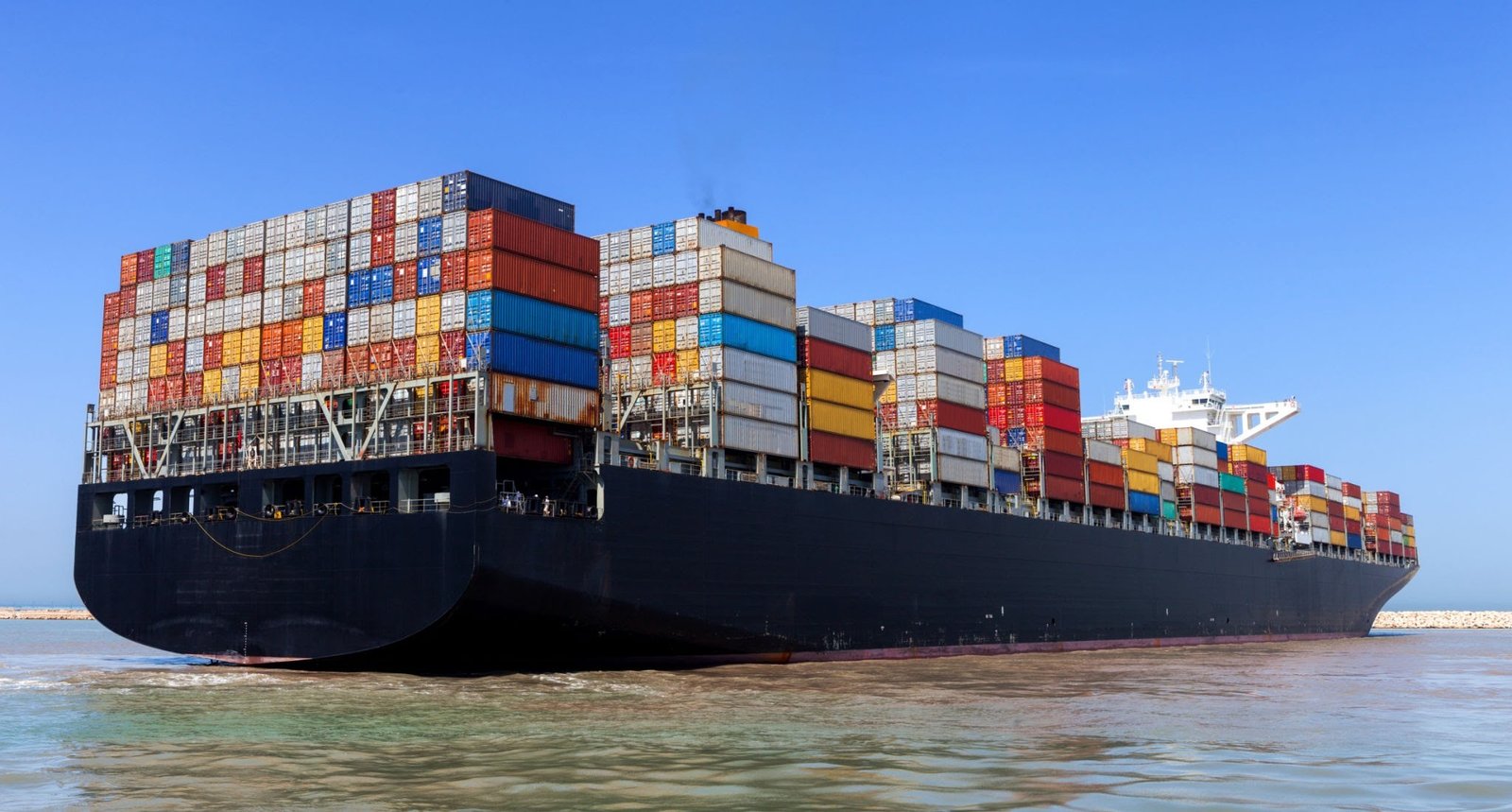
Modern deep-draft mega-vessels demand entirely new port infrastructure.
The Brooklyn docks rotted, while the Port of Newark thrived. London’s shipping industry collapsed, while the tiny UK town of Felixstowe seized 40% of Britain’s container traffic. Today, the geographic center of gravity for global trade rests firmly in Asia, with seven of the world’s top ten container ports located in China.
Case Study: Syama Prasad Mookerjee Port, India Commissioned in 1870, Kolkata is India’s oldest operating port. Positioned 203 kilometers inland on the Hooghly River, it faced an existential threat from mega-containerships due to shallow drafts and tidal bores. To survive, the port authority commissioned the Haldia Dock Complex closer to the sea, allowing it to handle heavily loaded Panamax vessels. Today, it utilizes floating cranes and Ship-to-Ship (STS) transshipment out in deep-water anchorages to bypass riverine limitations entirely, handling over 66 million metric tonnes of cargo annually.
The Era of the Smart Container: IoT and the Global Nervous System
For the first sixty years of its existence, the shipping container was a passive entity. Today, the maritime industry is transforming these vessels into highly intelligent, connected nodes within the global Internet of Things (IoT).
A “smart container” is an intermodal unit retrofitted with telemetry devices: IoT sensors, GPS tracking, cellular/satellite connectivity modules, and cloud-based analytics platforms. These systems provide continuous, real-time visibility into the container’s precise location, internal temperature, humidity levels, barometric pressure, shock impacts, and door-open status.
Historically reserved for high-value cold chain logistics—transporting sensitive pharmaceuticals or perishable foods—shipping lines are rapidly expanding IoT tracking into the standard dry container fleet to combat supply chain volatility and cargo theft. The smart container market, valued at roughly $5.5 billion in 2025, is projected to surge past $39 billion by 2036, driven heavily by export traceability demands in India and China.
LEO Satellite Connectivity and the Starlink Disruption
The primary technological bottleneck for the smart container ecosystem has always been maintaining continuous connectivity in the middle of the ocean. Legacy Geostationary (GEO) satellite internet suffers from high latency (600+ milliseconds), expensive data caps, and slow speeds.
The critical enabler for next-generation maritime logistics is the deployment of Low Earth Orbit (LEO) satellite constellations, spearheaded by SpaceX’s Starlink Maritime. Orbiting at merely 550 kilometers above the Earth, LEO satellites reduce latency to 20–60 milliseconds.
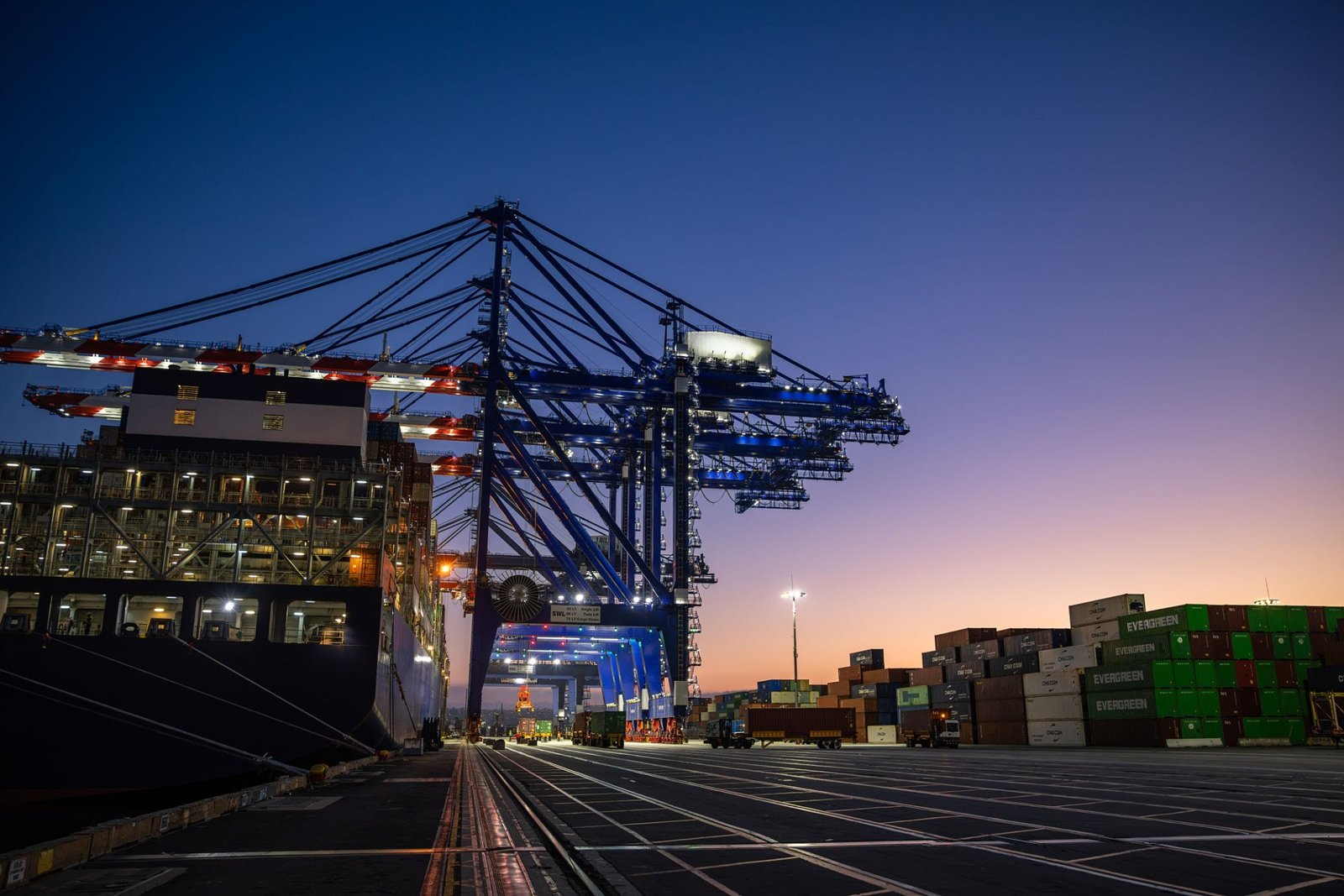
Modern ports rely on real-time data flow synchronized with approaching vessels.
Utilizing Flat High Performance (FHP) phased-array antennas that electronically steer beams to track satellites across the sky, vessels can maintain connections despite the violent pitch and roll of heavy seas. With continuous, high-bandwidth LEO connectivity, the cargo ship acts as a floating server hub. Thousands of smart containers communicate with the vessel’s central router, instantly beaming telemetry onshore, allowing artificial intelligence to optimize logistics while the ship is still thousands of miles from land.
Conclusion: The Vulnerability and Sustainability of a Containerized World
The humble steel box has undeniably enlarged human choice and elevated millions out of poverty by integrating developing nations into the global manufacturing matrix. The hyper-efficiency of containerization birthed a “Lego-brick economy,” characterized by highly fragmented, heavily interdependent “just-in-time” supply chains.
Because transport is practically free, corporations maintain minimal onshore inventory, relying entirely on the constant, uninterrupted flow of ships. Consequently, the global economy has grown dangerously brittle. When a localized disruption occurs—whether a pandemic, a blocked canal, or a collapsed bridge—the ripple effects paralyze assembly lines and empty retail shelves worldwide in a matter of days.
Furthermore, the environmental debt of this global conveyor belt is rapidly coming due. The commercial maritime sector is responsible for approximately 3% of all global anthropogenic CO₂ emissions, burning highly toxic heavy fuel oil to maintain the relentless pace of trade. The industry is now entering an era of forced decarbonization, shifting toward green methanol and ammonia—a transition that represents the next great logistical challenge of the 21st century.
It is tempting to view the modern world solely through the lens of digital innovation—to believe that the internet is the primary mechanism of our interconnectedness. But the internet only moves ideas and capital; it cannot move physical sustenance. The true architecture of globalization is industrial, physical, and forged in corrugated steel. By dismantling the protections of distance, the shipping container did not merely change trade; it engineered the very structure of modern human civilization.
FAQs
Who invented the shipping container? The modern intermodal shipping container system was pioneered by Malcom McLean, an American trucking entrepreneur, in 1956. Mechanical engineer Keith Tantlinger invented the crucial twistlock mechanism that allowed the containers to be safely stacked and secured.
Why are shipping containers all the same size? Shipping containers adhere to the ISO 668 international standard, primarily operating in 20-foot (TEU) and 40-foot (FEU) lengths. This strict standardization ensures they can seamlessly transfer between ships, trains, and trucks anywhere in the world without requiring unloading.
How did containerization impact the global economy? Econometric studies show that the adoption of containerization boosted cumulative bilateral trade by roughly 750% over a 20-year period—nearly three times the economic impact of global free trade agreements (like GATT) during the same era.
What is a “Smart Container”? A smart container is a standard shipping container retrofitted with IoT sensors, GPS, and satellite connectivity. It transmits real-time telemetry data regarding its location, internal temperature, humidity, and security status to logistics operators onshore.
Key Takeaways
- Frictionless Trade: The container reduced cargo handling costs by over 97%, eliminating the primary economic barrier to global manufacturing.
- Open-Source Hardware: Releasing the patent for the “twistlock” mechanism for free was the catalyst that allowed global standardization to take root.
- Geographic Reconfiguration: The spatial demands of containerization destroyed historic river ports (like London and Brooklyn) and birthed massive deep-water mega-ports (like Shenzhen and Rotterdam).
- The Connectivity Era: Low Earth Orbit (LEO) satellite networks are transforming shipping fleets into floating data centers, enabling real-time IoT tracking of individual freight boxes across the ocean.
Final Insight True globalization was not drafted in diplomatic chambers or coded in Silicon Valley. It was welded in shipyards and defined by a +0 / -0.25 inch engineering tolerance—proving that the most profound revolutions often arrive in the plainest of boxes.
Subscribe to alborithm
Get new documentaries, articles and podcasts directly in your inbox.
Wonderful articles