


HUMANITY / COOPERATION / CIVILISATION
Sapiens Explained: How Humanity Built Civilisation
How did one species build shared beliefs, money, empires and the modern world?
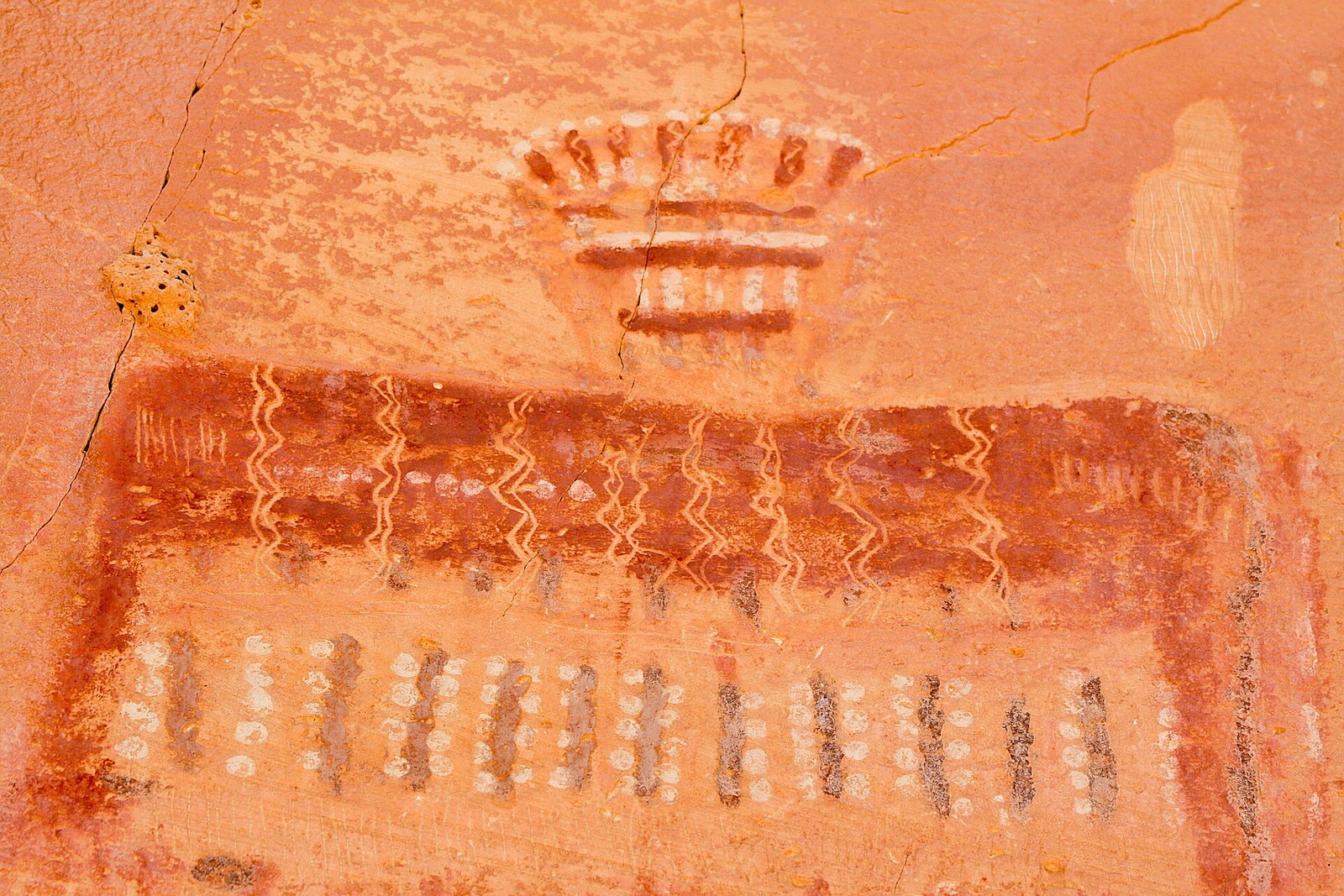
On a sandstone wall in the American Southwest, human figures survive long after the people who painted them. We cannot recover every meaning they intended. But the images draw us into a larger question: how did groups of humans come to share ideas and institutions on a scale that eventually connected farms, cities, currencies, empires and modern global commerce?
Yuval Noah Harari’s Sapiens: A Brief History of Humankind seeks to explain that transformation. It moves from prehistoric foragers to farming communities, empires and money, then to scientific institutions, capitalism and biotechnology. It became influential because it links subjects commonly separated into history, economics, anthropology, science and philosophy. Its greatest intellectual strength, the sweep of its synthesis, is also its greatest vulnerability: large historical explanations can conceal unresolved evidence and competing interpretations.
ALBORITHM | GREAT BOOKS | ISSUE 007
Watch and listen to Sapiens
One English video explainer and three independent Deep Dive discussions, available in English, Hindi and Bengali.
What is Sapiens really about?
Harari asks why Homo sapiens came to exercise so much influence over other species and the Earth’s ecosystems. His organising idea is that people cooperate at enormous scale through flexible shared understandings. These include religions, laws, corporations, political institutions and the expectations that support exchange. The rules are human creations, yet their consequences for economic opportunity, physical safety and political power can be profoundly real.
First published in Hebrew in 2011, the book appeared in English in the United Kingdom in 2014 and the United States in 2015. Its standard English text contains four parts, 20 chapters and an afterword. The argument is not reducible to the catchy observation that people tell stories. It is also an inquiry into how those stories connect with ecological change, material resources, coercion, institutions and technologies.
The book should be read as a major work of popular synthesis rather than a complete account of specialist consensus. Harari’s own chapter-by-chapter reference list provides a starting point for checking particular propositions. A careful reader must distinguish the book’s narrative, its source material, subsequent research and our own modern comparisons.
Part I: The Cognitive Revolution and the rise of human cooperation
The opening chapters are An Animal of No Significance, The Tree of Knowledge, A Day in the Life of Adam and Eve and The Flood. Harari begins with the evolution of human relatives, then examines language, shared narratives, foraging life and migrations across the planet.
Were humans destined to dominate?
No straightforward path leads from early stone technology to modern financial networks. Earlier humans survived in environments where they competed with predators, adapted to climate and navigated complicated social groups. Harari’s account emphasises the power of language, especially the ability to communicate about things that are not present or immediately observable. Such abilities can support trust among strangers, common religious identities and the formation of durable institutions.
Exactly when these capacities arose is uncertain. The label Cognitive Revolution provides a memorable narrative framework, but researchers continue to debate gradual development, regional variability and whether the available archaeological record can establish a single decisive transformation. The Smithsonian places the appearance of our species at roughly 300,000 years ago, and discoveries at Jebel Irhoud contributed evidence for early Homo sapiens in Africa. Neither fact demonstrates the date or mechanism of one cognitive breakthrough. See Smithsonian Human Origins and Hublin and colleagues in Nature (2017).
What became of other human species?
The survival of our species and the disappearance of others are not adequately explained by a single dramatic event. Competition, shifting environments, migration and genetic interactions all belong in the discussion. Ancient DNA makes clear that some populations of modern humans carry genetic inheritance from other hominins. That complicates a simple replacement narrative. Caution is also required when attributing prehistoric animal extinctions solely to human activity: the balance between hunting, habitat changes and climate varies by time and place.
Part II: Was the Agricultural Revolution humanity’s biggest mistake?
Part II comprises History’s Biggest Fraud, Building Pyramids, Memory Overload and There Is No Justice in History. Harari reverses the conventional image of farming as an uncomplicated step forward. Permanent settlement and domestication supported larger populations, but some farmers faced monotonous labour, crowded living conditions, disease, dietary constraints and greater dependency on seasonal harvests.
Why call agriculture a fraud? The metaphor invites a distinction between the success of a population and the welfare of its individual members. A farming society might expand in size and accumulate wealth without making every person healthier, freer or happier. Yet the historical record is diverse. Bioarchaeological research at Çatalhöyük explores crowding, mobility and health in a particular Neolithic community; it cannot establish that every forager in every environment enjoyed a better life than every farmer. See Larsen and colleagues, PNAS (2019).
Why did cities require records?
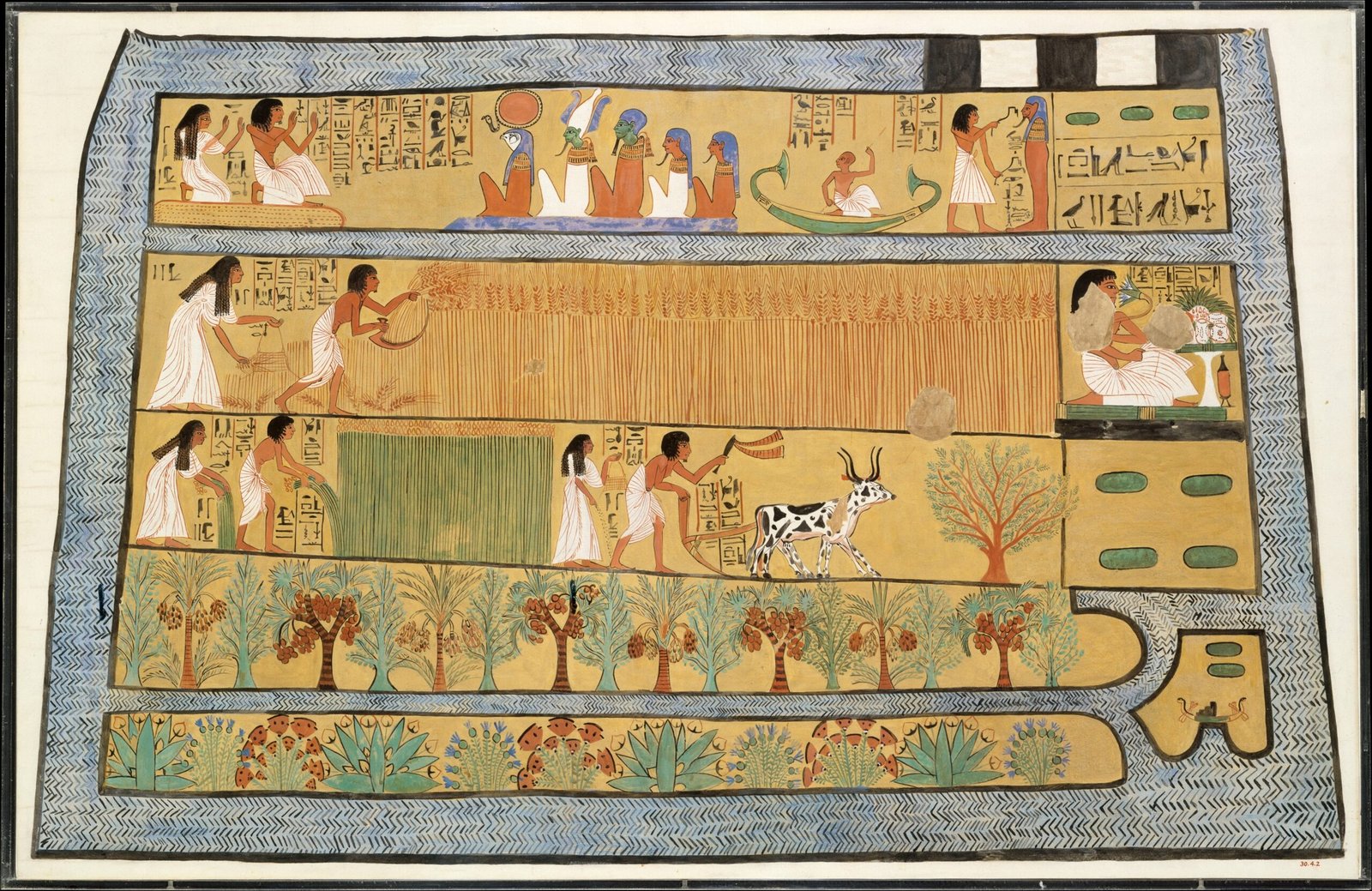
With larger settlements came new problems of storing resources, recording obligations, distributing labour and settling disputes. Early administrative systems, numerical notation and written records helped institutions operate beyond the memory of one individual. This does not mean all writing systems developed from identical economic motives. It means that the expanding scale of organisation made durable methods of recording information increasingly useful.
Harari’s discussion of social hierarchies is equally important. Agricultural and urban societies often institutionalised inequalities between groups, occupations and genders. The existence of a long-lasting hierarchy does not demonstrate that it was biologically inevitable or ethically justified. Region-specific historical evidence matters more than sweeping claims about a timeless human nature.
Part III: How money, empires and religions united distant societies
The five chapters are The Arrow of History, The Scent of Money, Imperial Visions, The Law of Religion and The Secret of Success. Their common theme is the emergence of systems of cooperation linking individuals who do not share personal relationships, languages or local customs.
Money: confidence made transferable
People can accept money from complete strangers because they expect someone else to accept it later. Harari interprets this as a particularly effective form of collective belief. That insight becomes richer when paired with the institutions that maintain credible money: law, payment arrangements, political authority, financial stability and procedures for resolving claims. Modern money is neither simply a physical commodity nor merely a pleasant shared story. The Bank of England’s explanation of money and trust illustrates how confidence and institutions interact today. It does not establish that all ancient currencies followed the same rules. For a different account of monetary organisation, see ALBORITHM’s analysis of John Maynard Keynes’s A Treatise on Money.
Empires: integration and unequal power
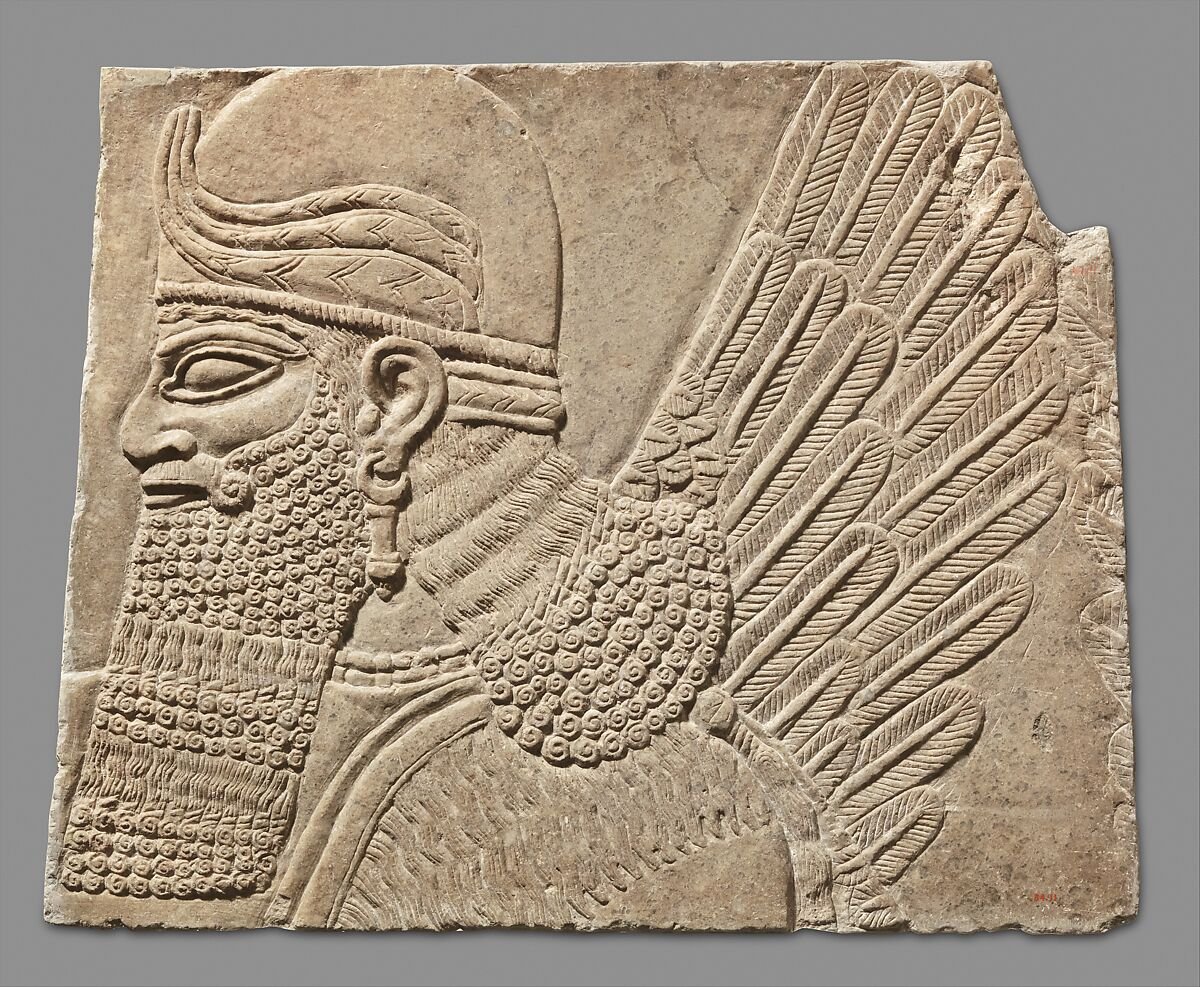
Empires could circulate languages, religious practices, commercial technologies and cultural forms. At the same time, conquest, coercion, extraction and unequal political rights were central to many imperial projects. It is a distortion to describe empire as either an entirely benevolent engine of integration or an undifferentiated sequence of devastation. Historical consequences varied, and affected communities rarely experienced imperial institutions in the same way.
For ALBORITHM’s interests in India, shipping and global trade, this history has special significance. The history of exchange across the Indian Ocean preceded European imperial expansion by many centuries. Maritime networks connected merchants and communities through seasonal travel, credit, trust and political arrangements. Later trading companies and imperial powers acquired different kinds of coercive capacity. Our earlier analysis of The Influence of Sea Power upon History explores an important dimension of maritime power, while The Architecture of Global Trade follows longer commercial transformations.
What do religions and laws have in common?
Shared institutions shape how large groups understand obligations and legitimacy. Religious commitments, legal rights, political authority and ethical norms can organise cooperation, but they are not interchangeable. A useful critical reading asks whether Harari’s categories preserve the distinctions between metaphysical beliefs, social conventions, enforceable laws and empirical facts. The social effects of belief are observable even where claims about ultimate truth remain contested.
Part IV: The Scientific Revolution, capitalism and the uncertain future
The final seven chapters cover The Discovery of Ignorance, The Marriage of Science and Empire, The Capitalist Creed, The Wheels of Industry, A Permanent Revolution, And They Lived Happily Ever After and The End of Homo Sapiens. The afterword is The Animal That Became a God. These sections shift from early modern knowledge and imperial expansion to industrial economies, consumption, happiness and biological futures.
Science begins with questions, but not in one place
Harari emphasises the growing willingness of scientific institutions to acknowledge ignorance and test explanations. That is an illuminating account of intellectual change, but careful history also acknowledges scientific traditions across the Islamic world, South Asia, East Asia and other regions. The seventeenth-century Royal Society is one important institutional reference, not the exclusive origin of observation, calculation or systematic inquiry.

Why did capitalism promise a larger tomorrow?
Credit allows enterprises to mobilise resources against future expectations. Harari connects expanding credit, technological investment, colonial enterprise and growth-oriented institutions. Yet capitalism is not explained by credit alone. Ownership, labour relations, political institutions, resource access, legal enforcement and inequality also shaped industrial development. Adam Smith’s The Wealth of Nations provides a complementary account of specialisation, markets and public institutions.
Can prosperity be measured in happiness?
Industrial societies have produced extraordinary technical capabilities, but there is no single unquestioned metric of a good life. Subjective wellbeing, health, freedom, environmental stability and social connection require different measures. The Stanford Encyclopedia of Philosophy reviews competing ideas of happiness, and Our World in Data documents empirical happiness measures with methodological limitations. The narrower question of how people perceive wealth and financial success is examined separately in ALBORITHM’s analysis of The Psychology of Money.
The closing discussion of biotechnology and potential post-human technologies should be understood as speculation and ethical inquiry, not as evidence that a particular technological destiny is certain. Modern scientific developments may sharpen the questions without proving an inevitable outcome.
Is Sapiens accurate? Five important criticisms
The book’s power comes from an elegant historical synthesis. But intellectual elegance should not substitute for checking the original sources. The most productive objections concern the strength of particular generalisations, the choice of categories and the way uncertainty is presented.
| Harari’s central theme | Important qualification |
|---|---|
| A Cognitive Revolution transformed our species | The timing and mechanisms of behavioural change are contested; fossil dates and cognitive capacities must not be conflated. |
| Agriculture was a historical mistake | Compare demographic success with individual welfare; regional experiences varied substantially. |
| Shared stories enable massive cooperation | Cooperation also depends on institutions, material incentives, sanctions, power and technical systems. |
| Money and empire unified humanity | Integration could involve violence, exploitation and competing historical trajectories as well as exchange. |
| Human power increased faster than happiness | Claims about welfare depend on the chosen measure, available evidence and philosophical assumptions. |
These issues do not justify dismissing the entire book. They clarify the difference between a stimulating interpretive framework and an established finding. Academic discussions, including David E. Nye’s review of Harari’s work in Technology and Culture, offer additional critical perspectives. A scholarly critique is itself an argument to be examined rather than a blanket verdict.
Why Sapiens matters to economics, geopolitics and technology today
Contracts, currencies, banking rules and international standards allow strangers to cooperate. Trust works alongside enforceable institutions rather than replacing them.
New technological power creates political and ethical questions about who benefits, who controls systems and which harms are acceptable.
Aggregate production may improve while benefits remain unequally distributed. Historical progress requires more than one measure.
Interconnected societies can exchange knowledge and commerce while retaining strategic rivalries and unequal bargaining positions.
These are contemporary applications by ALBORITHM, not claims that Harari specifically predicted later trade disputes, artificial-intelligence developments or political events. His book gives us useful questions about institutions and power, but careful contemporary analysis still requires dated independent evidence.
Frequently asked questions about Sapiens
What is the main message of Sapiens?
Harari argues that the flexibility of human cooperation, sustained partly by shared narratives and institutions, helps explain the remarkable global influence of Homo sapiens. The book follows the consequences through agriculture, money, empire, science and technology.
How many chapters are in Sapiens?
The standard English edition has four parts, 20 chapters and an afterword. The parts are the Cognitive Revolution, Agricultural Revolution, Unification of Humankind and Scientific Revolution.
Is Sapiens based on established scientific evidence?
It brings together evidence from several academic fields but also advances broad hypotheses and contested interpretations. Some conclusions require caution or updating in light of later research.
Is Sapiens useful for studying economics and geopolitics?
Yes, as an introduction to important questions about institutions, money, power, cultural integration and technological change. Readers should supplement it with specialist historical and economic studies.
Can I legally download the full book for free?
Sapiens is copyrighted. Access should come from a lawful library, publisher, retailer or another authorised provider; an online PDF is not automatically an authorised copy.
ALBORITHM’s assessment: read the ambition, test the evidence
Sapiens remains worth reading because it asks unusually large questions with considerable narrative force. Where did the institutions around us come from? Why are human beings so effective at large-scale coordination? Why has technological power not settled arguments about wellbeing? The responsible response is neither uncritical admiration nor automatic dismissal. It is to compare the argument with evidence, identify its limits and consider perspectives that the grand narrative leaves behind.
The most durable question is not simply how humans came to dominate the world. It is how such power ought to be governed, and to whose benefit.
Sources and further research
Original independent analysis by ALBORITHM, not the book text or an endorsement by its author, publisher or cited institutions. The 2015 English reference edition remains subject to final page-by-page source verification before public release.
- Smithsonian Libraries, edition and contents catalogue for Sapiens.
- Yuval Noah Harari, official chapter-by-chapter bibliography.
- Smithsonian Human Origins, Homo sapiens.
- Hublin and colleagues, early Homo sapiens fossils, Nature, 2017.
- Larsen and colleagues, Çatalhöyük bioarchaeology, PNAS, 2019.
- Bank of England, money and trust.
- Royal Society, institutional history.
- Stanford Encyclopedia of Philosophy, happiness.
- Our World in Data, happiness and life satisfaction.
- David E. Nye, critical review of Harari, Technology and Culture, 2021.
Visual evidence and image licences
The featured and body images are photographs or documented facsimiles of genuine historical objects and places, not AI-generated depictions, photographs of Harari, or images from the copyrighted book. These images illustrate distinct historical examples; they do not claim to represent the exact people, period or event discussed throughout Sapiens.
- Great Gallery pictographs, Horseshoe Canyon, National Park Service photograph by Neal Herbert. Public-domain file; NPS historical context.
- Charles K. Wilkinson, Sennedjem and Iineferti in the Fields of Iaru, 1922 facsimile of ancient Egyptian scene, The Met object 30.4.2, public domain.
- Neo-Assyrian palace relief, Nimrud, The Met object 84.11, public domain.
- Astrolabe made by ‘Umar ibn Yusuf, Yemen, 1291 CE, The Met object 91.1.535a–h, public domain.
Subscribe to alborithm
Get new documentaries, articles and podcasts directly in your inbox.