


OIL SHOCK | HEADLINE INTELLIGENCE
Oil Shock in India: Inflation Pressure and a Broader Equity Selloff
The oil shock lifted Brent to $116.72 at Friday’s settlement as an energy-supply risk premium spread through financial markets. Indian equities recorded broad weekly losses, while the RBI’s latest reserve data revealed another decline. The central question is how much imported-cost pressure India’s economic resilience can absorb.
Nifty 50: 22,600.00 | Sensex: 73,123.83 | USD/INR: 94.94 | Brent: $116.72/bbl | FX reserves: $721.016bn (week ended 16 October)
Market closes and oil settlement: Friday 23 October 2026. Reserve stock date: 16 October 2026. Cutoff: Sunday 25 October 2026, 22:00 IST.
01 | Executive Intelligence Brief
The week’s oil shock culminated in a Brent settlement of $116.72 per barrel, up about 6.2% for the week. The Nifty closed at 22,600 and the Sensex at 73,123.83, down approximately 2.4% and 2.2% respectively during the week. Fifteen of sixteen major equity sectors declined. The more pronounced losses among smaller companies point to tighter risk tolerance well beyond the benchmark indexes. [S1][S2]
The rupee ended at 94.94 per US dollar on 23 October, almost unchanged over the week despite a midweek recovery. The RBI reported reserves of $721.016 billion for the week ended 16 October, down $5.011 billion. Stronger demand for dollar liquidity and high import costs warrant monitoring, but the reserve change cannot be assigned entirely to intervention without disaggregated evidence. [S3][S4]
02 | Oil Shock Analysis: Prices, Equities and Inflation
The direct market event was an escalation of concern over Middle Eastern energy supply and shipping security, not a new Indian demand shock. Brent’s $6.86 weekly increase adds to an already elevated import-cost baseline. The effect on Indian retail inflation depends on landed costs, exchange rates, inventory lags, taxes, fuel pricing and the duration of the disruption. The magnitude of that pass-through cannot yet be measured from Friday’s price alone. [S1]
The oil shock complicates the RBI’s existing task. The October policy decision raised the repo rate to 5.50%. September CPI inflation was 5.54% and wholesale inflation 11.39%. These are differently constructed price indexes; simultaneous increases are informative but do not imply a one-to-one transmission or a predetermined future rate decision. [S5][S6]
03 | Markets & Macro Dashboard
India’s latest market observations are Nifty 50 at 22,600, Sensex at 73,123.83 and USD/INR at 94.94 on 23 October. Brent settled separately at $116.72 per barrel. The latest reserve stock is $721.016 billion for 16 October. The economic activity baseline remains Q1 FY27 real GDP growth of 7.8%, August industrial output growth of 8.0% and September CPI of 5.54%. [S1][S2][S3][S4][S5]
Market returns, official macroeconomic releases and reserve figures belong to different time windows. The Nifty’s approximately 2.4% weekly fall is not a monthly change; the 5.54% CPI figure is year-over-year inflation for September. The issue preserves these observation labels to avoid a false synchronous snapshot.
04 | Global Economy & Geopolitics
Escalating attacks involving Saudi energy infrastructure, renewed threats to shipping and regional supply uncertainty raised the crude benchmark’s risk premium. Reuters reported Brent’s Friday settlement at its highest level since late April. Market prices establish a response to perceived risk; they do not independently establish how many physical barrels will be lost or for how long. [S1]
India is exposed through crude cargoes, chartering, insurance, exchange conversion and financing. Oil diversification helps physical continuity, but it does not eliminate benchmark pricing or rising freight premiums. Cargo delivered-cost evidence is consequently more informative than a diplomatic or production announcement alone. For the related maritime-security perspective, see ALBORITHM Shipping & Global Trade Compass Issue 003.
05 | India Macro & Liquidity Radar
The RBI’s reported foreign-exchange reserve stock fell by $5.011 billion to $721.016 billion in the week ended 16 October. Foreign currency assets declined, while the valuation of other reserve components partly offset the fall. The reserve stock remains material, but a weekly change by itself is not an estimate of intervention. [S4]
The RBI announced a four-day variable-rate repo operation for 26 October. The announcement concerns liquidity management, not a new change in the policy repo rate. Deposit competition, money-market borrowing costs and government debt supply should be watched together with the oil-import bill. [S7]
06 | Rules, Policy & Release Calendar
The October repo rate remains 5.50%, and the next inflation readings have not been published as of this issue’s cutoff. The RBI’s scheduled liquidity operation, subsequent inflation and industrial-production reports, corporate results and the next weekly reserve publication are the key observation points. A scheduled event is not evidence of a future outcome. [S5][S7]
The October RBI Bulletin examines the state of the economy, bank lending-rate transmission and non-bank financial companies. Its assessments provide context, not a binding policy forecast. [S8]
07 | Research & Data Brief
September merchandise exports of $44.40 billion and imports of $74.61 billion left a goods-trade deficit of $30.21 billion. The reported September deficit predates the latest oil shock, so it cannot be presented as a quantified consequence of this week’s developments. Goods trade also is not equivalent to the overall current account. [S9]
The methodological rule is to separate preliminary statistics, final market closes, policy announcements and analytical scenarios. Earlier GDP, IIP, CPI and WPI figures remain the latest available for their respective reporting periods. No value was estimated to fill a non-trading Sunday gap.
08 | Company Research Lab: Banking
HDFC Bank’s latest reported standalone quarterly net profit was Rs 19,510 crore, around 4.7% higher year on year; net interest income increased around 9.7% to Rs 34,619 crore. Despite profit growth, investors remained sensitive to funding costs, deposit pricing, asset-quality trends and treasury volatility. These metrics are reported results rather than forward earnings guarantees. [S10]
A banking analysis needs deposit growth, the cost of funding, net-interest margin, provisions, capital adequacy and cash-generating franchise strength alongside profit. Short-term share-price performance reflects changing expectations and liquidity conditions as well as published accounts. This is not a recommendation on HDFC Bank or any other security.
09 | Global-to-India Transmission
A prolonged oil shock can widen the goods-import bill, increase working-capital needs and complicate inflation control. The outcome differs between oil-marketing companies, refiners, transport firms, banks and consumers. Hedging and inventory determine the timing and magnitude of profit effects. [S1][S9]
The rupee, import costs and market valuations respond to distinct but interacting forces. An importer can face both a higher dollar invoice and a weaker exchange rate, while an exporter may benefit from translation yet face lower global demand. Corporate exposure and contract terms therefore matter more than generic sector labels.
10 | Scenario Matrix
The monitoring case assumes the oil shock keeps energy and finance costs elevated without prolonged failure of physical supply channels. Inflation remains difficult, but domestic activity and company-level earnings create some resilience. This is a qualitative scenario and has not been assigned statistical probabilities.
The adverse case requires further interruptions to physical energy flows, additional imported inflation, rupee weakness or tighter credit. A relief case would need sustained lower delivered-oil costs, calmer foreign exchange trading and improved earnings breadth. The scenarios are signposts rather than investment price targets.
11 | Continuity, Revisions & Forward Intelligence
Issue 006 documented a strong IT-led market rebound despite rising September CPI and wholesale prices. Issue 007 records the oil shock alongside the next week’s reversal in equity prices, as Brent climbed from $109.86 on 16 October to $116.72 on 23 October. RBI reserves fell from approximately $726.03 billion to $721.016 billion between the two observation weeks. [S1][S2][S4]
For the coming week, follow actual energy shipments, published exchange closes, RBI liquidity outcomes, company filings and forthcoming releases. The governing editorial test is whether resilience in activity and cash generation can withstand a prolonged higher import-cost environment.
12 | ALBORITHM Bottom Line
India’s growth and industrial activity continue to provide a buffer, but oil, household inflation, financial-market liquidity and bank funding can become mutually reinforcing constraints. The oil shock signals a higher risk premium; it does not demonstrate an imminent recession.
A durable improvement requires observable easing in landed energy costs, stabilization of currency and short-term funding, moderation of inflation breadth and stronger corporate cash generation. This edition is educational and analytical, with no personalized investment recommendation.
Sources, Credits & Evidence
Release and observation dates are deliberately distinguished. The two photographs record separate verified events within this publication week; neither depicts an attack on energy infrastructure.
- [S1] Reuters, Brent settlement and supply risk, 23 Oct
- [S2] Reuters, Nifty/Sensex weekly close, 23 Oct
- [S3] Reuters, rupee close 94.94, 23 Oct
- [S4] RBI reserves reported by PTI/Business Standard, 23 Oct
- [S5] MoSPI official statistical portal and dated releases
- [S6] Ministry of Commerce, September WPI / inflation
- [S7] RBI VRR notice dated 23 October, 26 October auction
- [S8] RBI October 2026 Bulletin, dated 23 Oct
- [S9] Ministry of Commerce, September trade data
- [S10] HDFC Bank Q2 FY27 financial statements
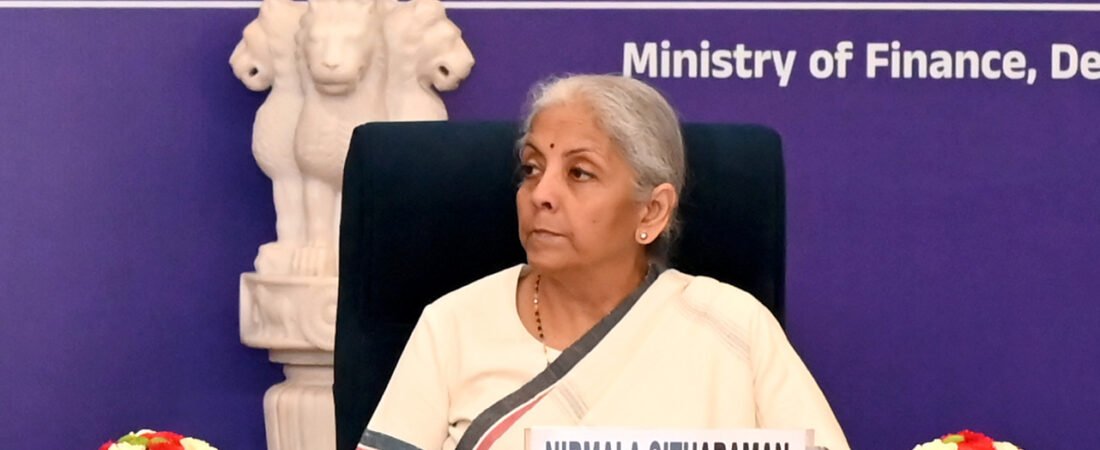
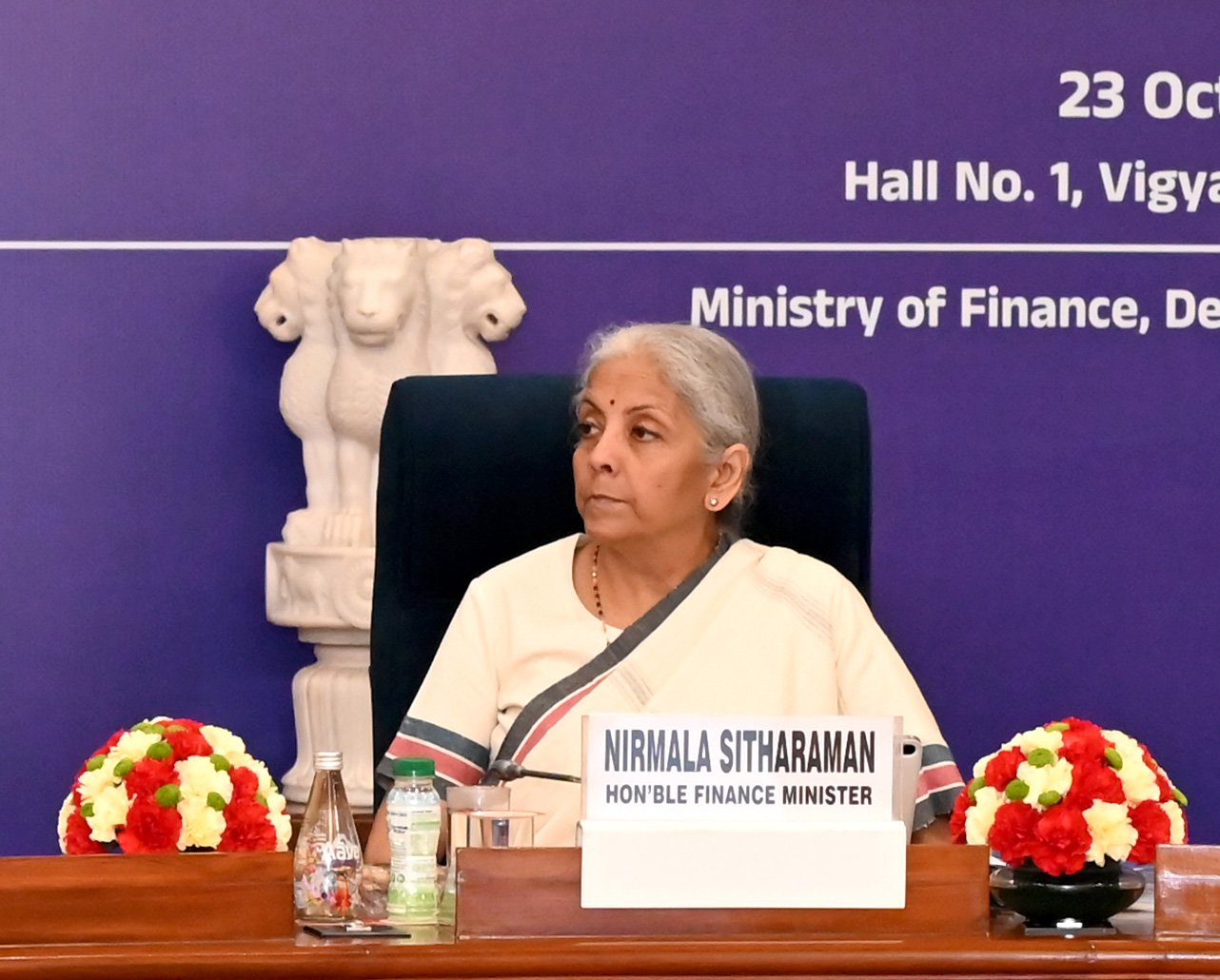
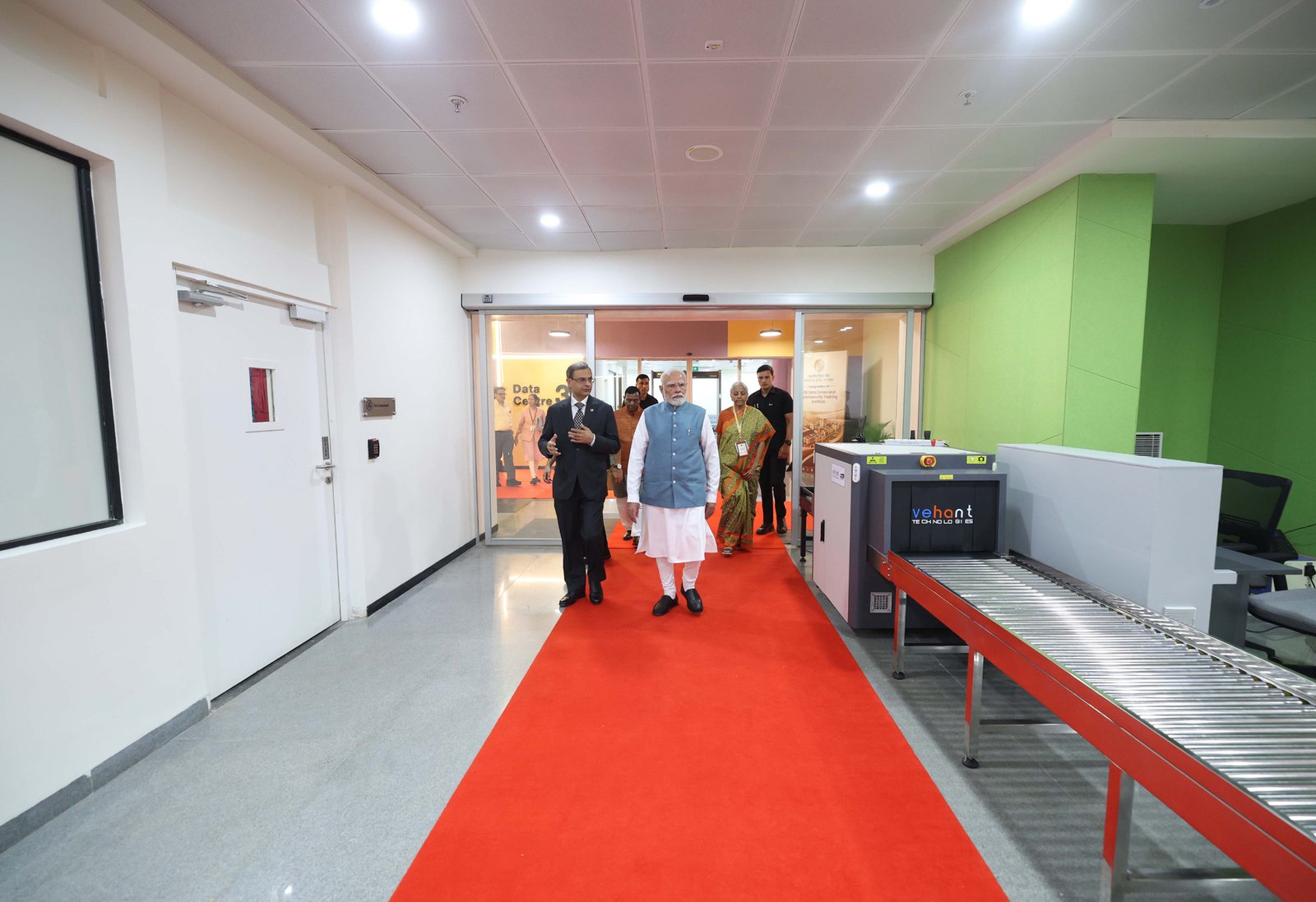
Photographs: Press Information Bureau, Government of India. Financial Stability and Development Council, New Delhi, 23 October 2026 (photo 218542); RBI Data Centre and Cybersecurity Training Institute, Bhubaneswar, 25 October 2026 (photo 218720). Research cutoff: 25 October 2026, 22:00 IST.
WATCH & LISTEN TO THIS ISSUE
Browse this publication’s video and audio programme. Unreleased Issue 007 media are clearly marked.
For information and education only. Not personalized investment advice. Research cutoff: 25 October 2026, 22:00 IST. All observations retain their source dates.
Subscribe to alborithm
Get new documentaries, articles and podcasts directly in your inbox.